
Topic – Affiliate Marketing
Post Reading Time – 39 Minutes
If you’re new to the affiliate marketing scene, you’ve probably heard people saying that “the money is in the list.” It’s a well-known saying and it has been around for decades. Apparently, you need to start collecting email addresses, sending newsletters and building a list of subscribers if you want to make any money. But what if you’re still trying to get your first website off the ground and barely have enough time to write your next article?
The good news is that affiliate marketing without an email list is absolutely possible. You don’t need hundreds of subscribers or an email marketing service to earn your first commission. What you do need is a way to attract people who are interested in the products you’re recommending and give them a good reason to click your affiliate links.
And that’s what I want to explain to you in this article. I’ll show you how affiliate marketing can work without collecting email addresses, how you can promote products through your website and what a realistic example of earning a commission looks like.
I’ll also go over the limitations of this approach and when building an email list might be worth considering.
Can You Make Money From Affiliate Marketing Without Email Subscribers?
Yes, you can earn affiliate commissions without having a single person on an email list. An email list isn’t a requirement for affiliate marketing, and many affiliate websites out there promote products through their content rather than sending out newsletters.
The important thing is getting the right people to visit your website. Someone might find one of your product reviews through Google, read what you have to say and click your affiliate link to visit the seller’s website. If they make a qualifying purchase and the sale is tracked correctly, you can earn a commission.
Of course, that doesn’t mean every single visitor will buy something, and there’s no guarantee of making money. You still need helpful content, relevant products and visitors who are interested in what you’re recommending.
An email list can become a good addition later, but you certainly don’t need one to get started.
What You’ll Learn From This Post
- How affiliate marketing works without an email list – How visitors can find your website, click your affiliate links and make purchases that earn you commissions.
- Ways to promote affiliate products without email marketing – How to use helpful articles, product reviews and other methods to reach people who might be interested in your recommendations.
- A practical example of earning an affiliate commission – I’ll walk you through how someone could find a product review through Google and make a purchase without ever joining an email list.
- The limitations of not having an email list – What happens when visitors leave your website and why relying only on search traffic can have its drawbacks.
- When you should consider building an email list – How to recognise when collecting subscribers could be useful and why there’s no need to rush into it when you’re just getting started.
Summarize This Content Using AI

Start Your Training
- Build Your Website & Earn Revenue
- Support, Tools & Training Included
- Complete with Business HUB
- Artificial Intelligence Writers
- My Personal Support
- No Risk Free Starter Account
- FREE BONUS AI CREDITS
TL;DR
Affiliate Marketing Without an Email List
You can earn affiliate commissions without building an email list. I’d start off by concentrating on creating helpful website content, answering questions people are searching for and writing product reviews that give readers enough information to decide if something is worth buying or not. If someone clicks your affiliate link and makes a qualifying purchase, you can earn a commission without collecting a single email address.
The downside is that once visitors leave your website, you have no direct way to contact them again. That’s where an email list can become a good option later. But if you’re still building your first affiliate website, I’d concentrate on attracting the right visitors before worrying about collecting subscribers.
Why Don’t You Need an Email List for Affiliate Marketing?
The simple reason is that affiliate marketing doesn’t actually depend on you having a list of email subscribers. You earn commissions by referring people to businesses through your affiliate links, and those referrals can come directly from your website.
When someone clicks an affiliate link in one of your articles, they’re taken to the company’s website. The affiliate programme uses tracking methods to identify where that visitor came from. If they go on to make a qualifying purchase or complete another action covered by the programme, such as signing up for a paid service, you may earn a commission.
Of course, the referral needs to be tracked correctly, and every affiliate programme has its own terms, attribution rules and commission requirements. If you’re interested in how this works, I’ve explained the process in my article on affiliate tracking cookies. But nowhere in that process does the visitor need to subscribe to your email list first.
Why Do Some Affiliate Marketers Recommend Building an Email List?
You’ve probably noticed that some affiliate marketers put a lot of emphasis on email marketing. There’s a good reason for that. Having a list of subscribers gives them a way to stay in contact with people who have already shown an interest in their content.
They can send helpful information, recommend relevant products and let subscribers know when they’ve published something new. If someone isn’t ready to buy something today, they might become interested in it later.
But that’s a way of promoting affiliate products, rather than something you must do to earn commissions.
If you’re building your first affiliate website alongside a job, I’d concentrate on getting people to visit your content before worrying about collecting email addresses. After all, there’s no point in setting up newsletters if hardly anyone is finding your website in the first place.
Building an Audience Isn’t the Same as Building an Email List
This is something I think beginners should understand from the start.
Building an audience means attracting people who are interested in the subjects you’re writing about. They might find your website through Google, follow a link from another website or come across something you’ve shared on social media.
Building an email list means giving those visitors the opportunity to subscribe so you can contact them again after their first visit.
You can start attracting an audience with helpful articles and product reviews without asking anyone for their email address. As your website develops and more people begin visiting, you can decide if collecting subscribers would be worthwhile.
For now, I’d concentrate your efforts on giving readers useful information and recommending products that are relevant to what they’re looking for.
How Does Affiliate Marketing Without an Email List Work?
The whole idea is to create content that people can find when they’re looking for information, trying to solve a problem or thinking about buying something.
Think about someone who wants to start their first website but isn’t sure which hosting company to use. They might search Google for reviews, pricing information or recommendations before making a decision.
If you’ve written a helpful article that answers all their questions, they could find your website in the search results, read the advice you’ve given and decide to take a closer look at the hosting company you’re recommending.
And if they follow your affiliate link and make a qualifying purchase, you could earn a commission. And at no point during this process does anyone need to subscribe to an email list.
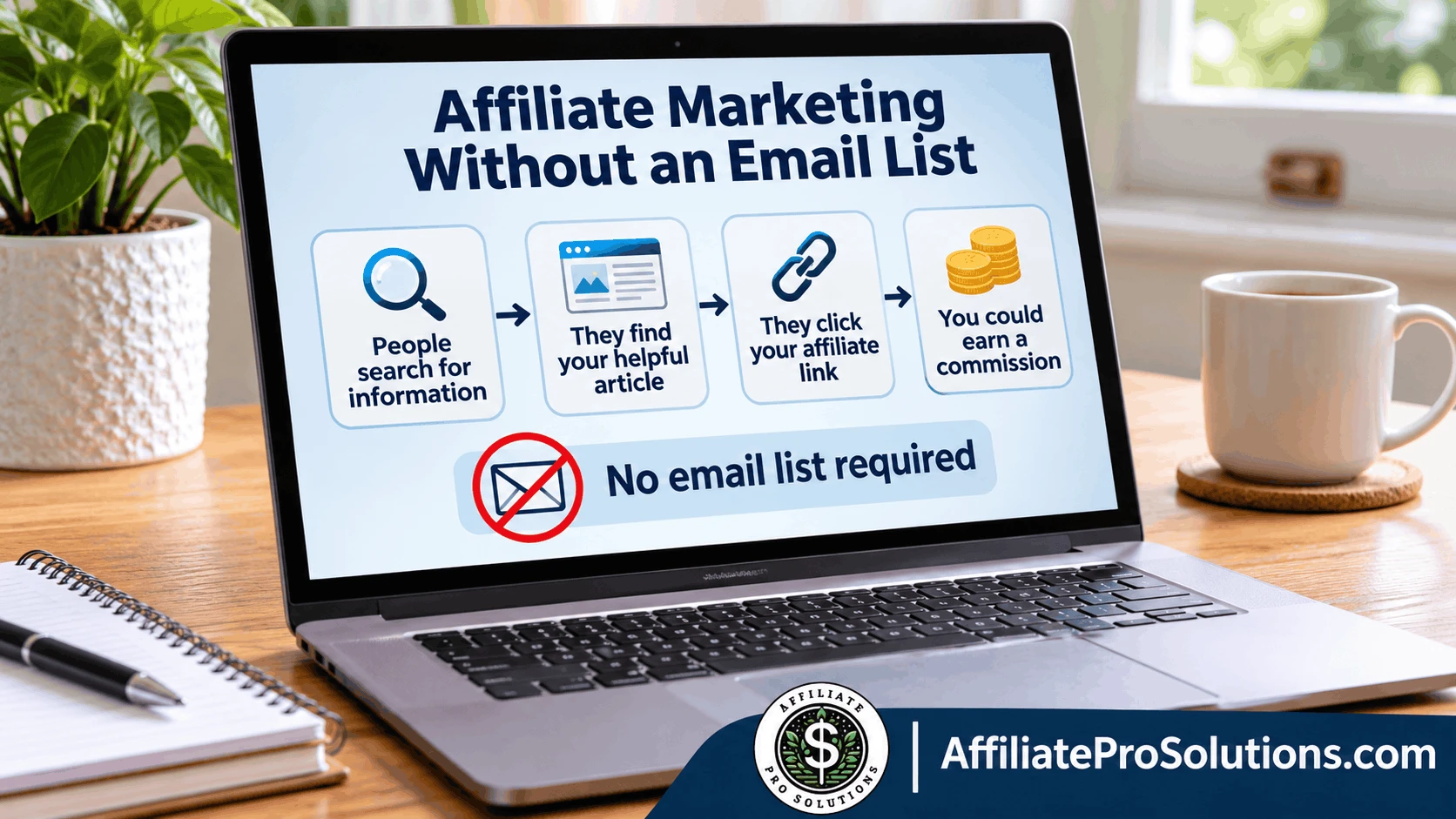
How the Process Works Step by Step
Here’s how someone could go from searching Google to buying a product through one of your affiliate links.
- Someone searches for information. They might type something like “best budget keyword research tools for beginners” or “is this hosting company any good?” into Google. They’re already interested in the subject, and they’re looking for information to help them make a decision.
- They find your article. If your content appears in the search results and the title catches their attention, they might click through to your website. This is why choosing relevant keywords and writing content that answers the searcher’s questions is so important. Of course, getting your pages to rank takes time and effort, and there’s no guarantee they’ll appear near the top.
- They read your recommendations. This is where your content needs to earn their trust. A well-presented product review should explain what the product does, its main features, pricing, the advantages and any limitations worth knowing about. You want readers to have enough information to decide if the product is something they need.
- They click your affiliate link. If the reader wants to learn more, they can follow your affiliate link to the company’s website. The affiliate programme uses its tracking system to record the referral. You don’t need to collect their name, email address or any other contact details yourself for this to happen.
- They make a purchase and you earn a commission. If the reader completes a qualifying purchase or another commissionable action under the programme’s rules, the referral may be credited to your affiliate account. The commission might initially appear as pending while the company checks the transaction. Once it’s approved, payment follows the programme’s payment schedule.
Why Your Website Content Matters
The interesting thing here is that the visitor has already shown an interest in the subject before ever reaching your website. They’ve searched for something specific, and your article gives them information that could help with their decision.
You don’t have to persuade someone to join a mailing list before they can read your recommendations or follow an affiliate link.
There’s another benefit to publishing helpful content. An article you write today could still attract visitors several months or even years from now, provided it remains useful and people can find it in the search results.
That doesn’t mean you can publish a few articles and forget about them. Search rankings change, competing websites publish new content and some product information becomes outdated. You’ll still need to check your articles and update them when it’s necessary.
But the principle remains the same. You’re creating useful pages that people can find when they’re looking for information, and those pages give you opportunities to earn affiliate commissions without running an email marketing campaign.
Ways to Promote Affiliate Products Without an Email List
If you’re working on building an affiliate website, the articles you publish are going to play a big part in attracting visitors and getting people interested in the products you’re recommending.
The good thing is that you have different ways to do this. You can write detailed product reviews, answer questions, help people complete specific tasks or recommend tools that could help them solve a problem they might be having.
What matters is understanding why someone would visit your page in the first place. Are they trying to learn something, looking for a particular product or deciding if something is worth spending their money on?
If I were starting a new affiliate website without an email list, I’d begin by choosing a subject I understood, finding a few questions people were asking and writing articles that answered them properly. I’d also look for relevant affiliate products and plan reviews around the ones my readers might be interested in.
Once those articles were published, I’d check which pages were attracting visitors and which affiliate links people were clicking. That would give me something to work with when deciding what to write next.
Here are five types of content you can use to promote affiliate products without an email list.
1. Product Reviews
Product reviews are one of the most straightforward ways to promote affiliate products through your website.
Think about someone searching Google for a review of a particular website builder or email marketing service. They’ve probably already heard of the product, but they’re just looking for more information before spending their money.
This is where a detailed review can help.
I’d concentrate on explaining what the product does, its main features, how much it costs and what readers should know before signing up or buying it.
It’s also important to discuss any limitations. For example, a service might have useful features, but some of them could be restricted to more expensive subscription plans. That’s something I’d want to know before paying for anything.
And if you’ve used the product yourself, explain what you did and what you found. Screenshots, practical examples and observations from using the product can make your review much more helpful.
If you haven’t used it, be honest and upfront about that. You can still research a product and explain its features, pricing and advertised capabilities, but don’t pretend you’ve tested something when you haven’t.
The point is to give readers enough information to make their own decision. If they’re interested in taking a closer look, your affiliate link gives them somewhere to go next.
2. Product Comparison Articles
Sometimes people have already narrowed their choices down to two or three products but aren’t sure which one to buy.
For example, someone might search for “GetResponse vs Mailchimp” because they’re trying to decide which email marketing service to use for their website.
A comparison article can help them understand what each service offers, the features included in different plans and any restrictions that might affect their decision.
I’d start by looking at what someone choosing between those products would actually want to know.
That could include things like pricing, ease of use, customer support, subscription limits and what happens when they need to upgrade.
You could also include a table showing the main differences, followed by a more detailed explanation of the features that matter.
The important thing is to give readers a clear reason for your recommendations. If one product has a feature that another doesn’t, explain why that might matter to someone using it.
And remember, you don’t need an affiliate relationship with every product mentioned. Your recommendations should be based on what you’ve found during your research or testing, rather than which company offers the highest commission.
3. How-To Guides That Recommend Useful Products
How-to articles are another way to introduce affiliate products naturally into your content.
Someone reading a guide is usually trying to complete a particular task or solve a problem. They might not have a specific product in mind, but they could need a tool or service to get the job done.
For example, imagine writing an article explaining how to create a contact form on a WordPress website.
You could walk readers through the process, explain the settings they need to check and mention a form plugin that can help them complete the task.
If that plugin offers a paid version with useful features and has an affiliate programme, you could explain those features and include an affiliate link where it’s relevant.
Of course, you shouldn’t recommend a paid product simply because there’s a commission available. If a free tool can do everything your reader needs, I’d explain that too.
The main purpose of the article is still to help someone complete the task they came to your website for.
If a product recommendation genuinely helps them along the way, there’s nothing wrong with including it.
4. Articles That Answer Specific Questions
You don’t have to write about products in every article to attract potential customers.
Sometimes, people are simply looking for an answer to a problem they’re having. They might not even realise there’s a product available that could help them.
For example, imagine someone going to Google because their website is taking ages to load.
An article answering that question could explain image sizes, unnecessary plugins, caching and hosting performance.
You could recommend a relevant tool where it would genuinely help, but there’s no reason to turn every solution into an affiliate recommendation.
These articles are also useful for attracting visitors who are interested in the subjects your website covers. Someone who finds one helpful answer might decide to read another article or take a closer look at one of your product reviews.
I’d pay attention to specific questions that aren’t being answered properly in the search results.
If you’re not sure how to find these types of questions, I’ve explained where to look in my article on what a long tail keyword is.
5. Resource Pages and Recommended Tools
Once you’ve published several articles and product reviews, you could create a resource page that brings together the tools and services you’d recommend to your readers.
For example, if your website helps people start affiliate marketing, you might have a page listing tools for website building, keyword research, content creation and checking website performance.
Each recommendation could include a short explanation of what the product does, why you’ve included it and a link to your full review where readers can learn more.
You could also include affiliate links to the products where appropriate.
One thing I wouldn’t do is create a huge list of tools just to fill the page with recommendations. I’d stick to recommending products that your readers could actually use, and explain what each one could help them with.
And I certainly wouldn’t rush into creating this type of page when you’ve only published a couple of articles.
Build up some solid content first, then consider putting together a resource page when you’ve got enough relevant recommendations to make it worthwhile.
Additional Affiliate Marketing Info & Resources
A Few Things I’d Keep in Mind When Promoting Affiliate Products
Regardless of which type of content you’re writing, there are a few things I’d recommend keeping in mind.
- Be open about affiliate links. Tell your readers clearly when you may earn a commission if they buy something through your links. Place your affiliate disclosure where people can easily see it, rather than hiding it somewhere at the bottom of your website. Make sure you follow the relevant advertising rules and the requirements of your affiliate programmes. If you’re unsure what’s expected, the FTC’s official endorsement guidelines explain how affiliate relationships should be disclosed.
- Don’t recommend products just for commissions. I’d rather explain one relevant product properly than fill an article with recommendations that don’t help anybody.
- Make your affiliate links easy to find. If someone has read your review and wants to visit the company’s website, they shouldn’t have to search through the entire article to find the link.
- Keep your information accurate. Product features, pricing, subscription plans and affiliate offers change. Check your existing content regularly and correct anything that’s become outdated.
- Give readers useful information before asking them to buy. Explain the product properly, answer all of their questions and let them decide if it’s something they want.
You also don’t need to use all five of these content types immediately.
If you’re still building your first affiliate website, start off with topics you understand and questions you can answer properly. Add relevant product reviews and recommendations as you develop your content.
The important thing is giving people a reason to visit your website and enough useful information to decide what to do next. An email list isn’t necessary for any of these approaches.
A Practical Example of Affiliate Marketing Without an Email List
Let’s look at a realistic example of how someone could earn an affiliate commission from a single product review without having any email subscribers.
I’ll use a fictional website and hosting company to explain the process. The commission amount and circumstances are made up for this example, so don’t take them as a prediction of what you could earn.
Imagine You’ve Written a Review of a Web Hosting Service
Let’s say you’ve started a small affiliate website that helps beginners create their first WordPress websites.
You’ve joined the affiliate programme of a hosting company and written a detailed review explaining what the service offers, how much it costs, what beginners should know and any limitations worth keeping in mind.
You’ve also included your affiliate link in a couple of relevant places, giving your readers the opportunity to visit the hosting company’s website if they’re interested.
Now imagine someone is planning to start their first website. They’ve already heard of this hosting company, but they’re not sure if it’s worth paying for.
So they go to Google and search for something like ‘is this hosting company good for beginners?’
Your review happens to appear in the search results, and they click through to read it.
The Visitor Reads Your Review and Clicks Your Affiliate Link
After reading through your article, the visitor decides the hosting service could be good for the website they’re planning to build.
They’ve looked at the features, checked the pricing and read what you’ve said about the service’s limitations.
They also appreciate that you’ve explained what they should keep in mind before committing to a subscription.
So, they click your affiliate link and visit the hosting company’s website.
At this point, you haven’t earned anything. All that’s happened is that someone has followed your recommendation to the company’s website.
The affiliate programme records the referral using its tracking system, provided everything is functioning correctly.
The visitor might decide to purchase a hosting plan immediately, or they might want a little more time to think about it.
A Few Days Later, They Decide to Buy
Let’s imagine the visitor doesn’t purchase anything during their first visit.
They have a look around the hosting company’s website, check a few other details and decide to come back later.
Three days later, they return to the company’s website using the same browser and purchase a hosting plan.
Now, depending on the affiliate programme’s tracking period and attribution rules, that purchase could still be credited to your original referral.
For example, imagine the programme allows a 30-day referral window and the visitor makes their purchase within that period. Provided the referral is still eligible under the programme’s attribution rules, you could receive a commission.
It’s important to remember that affiliate programmes have different rules. Some have shorter tracking periods, and others use different methods to decide which affiliate receives credit.
How Much Commission Could You Earn?
For this example, let’s say the hosting company pays a fixed commission of $20 for every qualifying new customer you refer.
The visitor purchases a qualifying hosting plan, the referral is successfully tracked and the programme credits the sale to your affiliate account.
Here’s how that could look.
- Product purchased – A qualifying web hosting plan.
- Commission offered – $20 per new customer.
- Successful referrals – 1
- Commission earned – $20, subject to approval.
You might initially see that $20 listed as pending in your affiliate dashboard while the company checks the transaction.
Once the commission has been approved, it becomes eligible for payment according to the programme’s terms and payment schedule. You may also need to reach a minimum payment threshold before receiving the money.
And this shows what I was saying earlier.
You haven’t sent a single newsletter, collected anyone’s email address or contacted the customer directly.
Someone found your review through Google, read the information you provided and decided to purchase through your affiliate link.
That’s it, and that’s how a commission can happen without having an email list.
What Made This Affiliate Sale Possible?
There are a few things worth taking away from this example.
- The review answered a specific search. The visitor wanted information about a particular hosting company, and your article helped them decide if it was worth considering.
- The content gave them useful information. You explained the features, pricing and limitations rather than just telling people to buy the product.
- The affiliate link was easy to find. Once the visitor decided to look further, they could reach the company’s website without searching around your article.
- The referral was tracked correctly. The purchase qualified under the affiliate programme’s rules, allowing the commission to be credited to your account.
- The visitor was already interested. They were researching a hosting service, so your review reached them while they were considering a purchase.
What Should You Take Away From This Example?
Of course, I don’t want you thinking that publishing one product review means you’ll automatically start earning $20 commissions.
Your article needs to attract visitors in the first place, and some people will read your content without clicking an affiliate link. Others might visit the company’s website but decide against buying anything.
And there’s always the possibility that your review won’t attract much traffic, especially while your website is still new.
That’s why I’d concentrate on building up a collection of helpful articles and relevant product reviews that answer different questions within your chosen subject.
Each article gives someone another opportunity to find your website, learn something and potentially follow one of your recommendations.
The $20 in this example is only an illustration, but the process behind it shows how affiliate marketing can generate commissions without an email list.
You create useful content, attract interested visitors and give them the information they need to make their own purchasing decisions.
What Are the Limitations of Not Having an Email List?
Although you can certainly earn affiliate commissions without having an email list, there are a few things worth understanding, especially if you’re planning to build your website into something that earns money regularly.
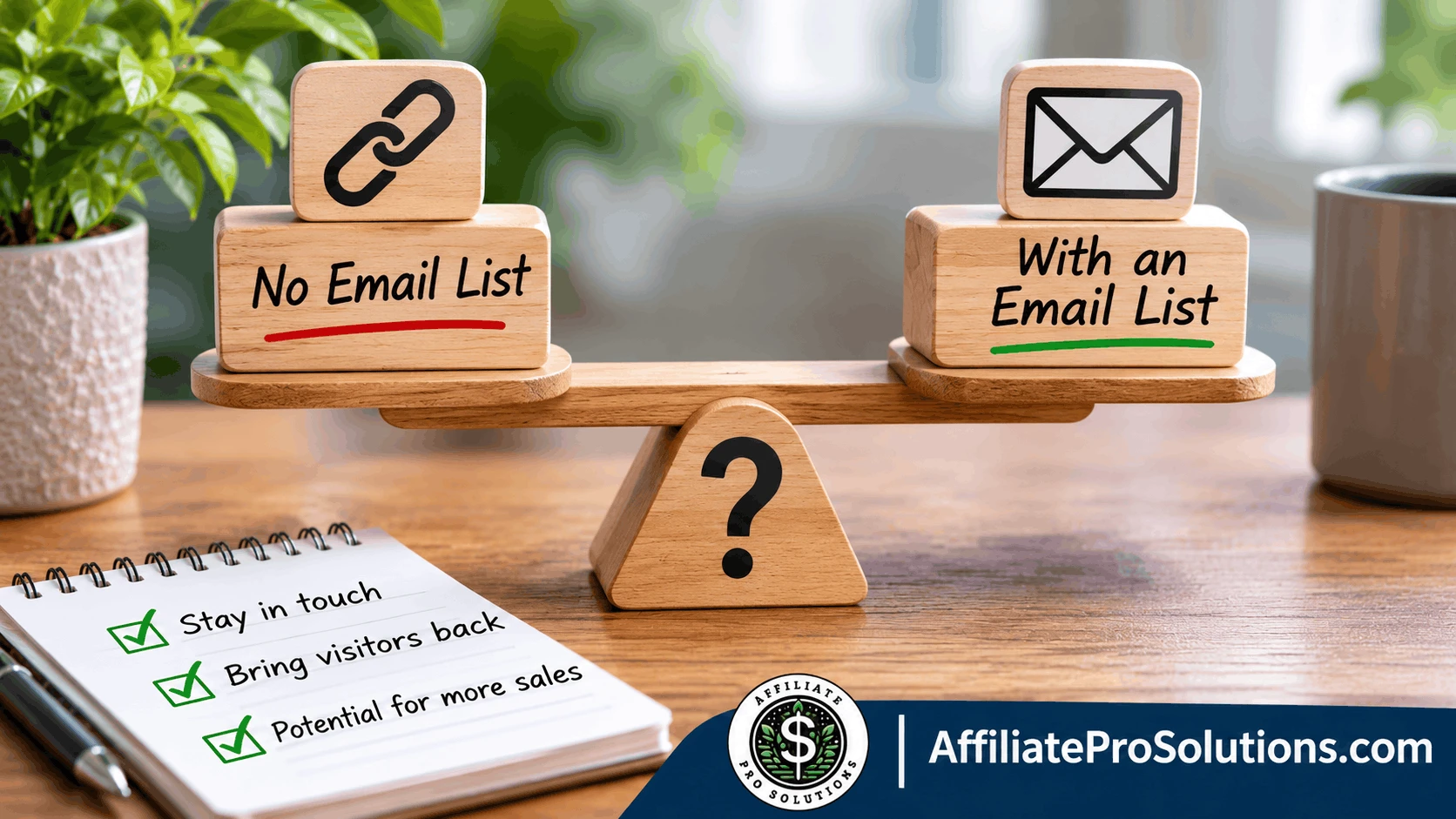
An email list gives you a way to stay in contact with the people who have already shown an interest in your content. Without one, you’ll need to rely on other ways of attracting visitors and encouraging them to return to your website.
That doesn’t mean you should immediately start collecting email addresses. But I think it’s worth knowing what you might be missing before deciding to leave email marketing completely out of your plans.
1. You Have Less Control Over Returning Visitors
Imagine someone finds one of your articles through Google, reads it and finds the information interesting and helpful.
They might even be interested in a product you’ve recommended, but they’re not quite ready to buy anything yet.
So they leave your website and carry on with their day.
Now, there’s nothing stopping that person from coming back. They might remember your website, save the page in their bookmarks or find another one of your articles later.
But there’s also a good chance they’ll forget where they found the information.
You’re relying on them finding their way back to your website.
2. Changes in Search Rankings Can Affect Your Traffic
If most of your visitors come from Google, changes in search rankings could have an effect on how many people reach your website.
For example, imagine one of your product reviews starts appearing near the top of the search results and attracts visitors every day.
That’s great, especially if some of those visitors are clicking your affiliate links.
But what happens if that article drops several positions?
You could see a reduction in visitors, affiliate clicks and potential commissions.
This is something every website owner needs to keep in mind, regardless of whether they have an email list or not.
And remember, not having an email list doesn’t mean Google has to be your only source of traffic. You can still bring people to your content through social media, links from other websites and other relevant sources.
The problem comes when your website depends too heavily on one source of visitors.
3. You Can’t Contact Interested Readers Directly
Let’s say someone regularly visits your website because they enjoy your articles about affiliate marketing and website building.
You’ve just published a nice review of a product they might be interested in.
Without their contact details, you have no direct way of letting them know that review is available.
They might eventually find it through Google, see something you’ve shared on social media or come across it while browsing your website.
But you can’t send them a message telling them you’ve published something new.
Of course, this doesn’t mean everyone who visits your website would want to receive emails from you anyway.
People have to choose to subscribe, and even subscribers won’t necessarily open every message you send to them.
Still, having an interested group of subscribers can give you another way to bring people back to your website.
4. You May Miss Opportunities to Help People Who Aren’t Ready to Buy
Something else worth remembering is that not everyone who visits an affiliate website is ready to buy something.
Someone might be researching a product, checking different options or simply trying to understand what they need.
They could enjoy your article and appreciate your recommendation but decide to leave the purchase for another day.
If they never return to your website, you may lose the opportunity to help them further or introduce them to another relevant product.
An email list can give interested readers the chance to hear from you again, provided they’ve agreed to receive your messages.
Without one, you’ll need to concentrate on making your website useful enough that people remember it, return themselves or find more of your content somewhere else.
Does This Mean You Should Start Building an Email List Immediately?
No, I certainly wouldn’t rush into it just because of the limitations I’ve mentioned here. They’re worth being aware of, but they don’t mean you need to change how you’re running your affiliate website.
If you’re happy with your current approach, there’s no reason to take on another task just yet. You can always reconsider email marketing later, and I’ll explain what I’d look for before making that decision further down the article.
Why Do Affiliate Marketers Build Email Lists?
There’s a good reason why affiliate marketers recommend building an email list. It gives them a way to keep in touch with people who are interested in what they have to say and introduce them to other information or products.
But having hundreds or even thousands of email subscribers doesn’t automatically mean you’ll earn more affiliate commissions. What matters is whether those people are interested in your content, open your emails and value the recommendations you make.
Let’s look at some of the main reasons affiliate marketers decide to build their own lists.
1. They Can Stay in Contact With Their Readers
When someone subscribes to your email list, they’re giving you permission to contact them about the subjects they’ve shown an interest in.
For example, imagine someone enjoys reading your articles about starting an affiliate website and decides to subscribe to your newsletter.
You could send them a helpful guide about choosing a niche, explain how to research keywords or let them know when you’ve published a new product review.
They don’t have to remember to visit your website every week to see what you’ve been writing.
Of course, that doesn’t mean subscribers will read every email you send. Some might lose interest, and others could unsubscribe altogether.
But an email list gives you another way to communicate with readers who have chosen to hear from you.
2. They Can Recommend Products When They’re Relevant
Email marketing also gives affiliate marketers opportunities to recommend products to subscribers who have shown an interest in a particular subject.
Let’s say you’ve written several helpful articles about building a WordPress website.
Someone subscribes because they want to learn more about creating their own site.
You could send them a few useful tips about getting started, followed by a link to your review of a hosting service that might interest them.
If they decide to read the review and eventually purchase through your affiliate link, you could earn a commission.
The important thing is that your recommendations should be relevant to what people originally subscribed for.
I’d avoid sending one promotional email after another simply because you have products to recommend. Give subscribers information they can use, and introduce products when there’s a reason to mention them.
3. They Can Learn More About Their Readers
Another benefit of having an email list is that you can learn more about the people who read your content and what they’re interested in.
For example, you could send your subscribers an email asking what they’re currently having trouble with on their websites or what they’d like you to cover in a future article.
Some might ask for help understanding affiliate commissions, while others could have questions about choosing products to promote or getting their first visitors.
Those replies could give you ideas for new articles and help you identify questions you haven’t covered on your website yet.
Depending on the email marketing service you’re using, you may also be able to see which links subscribers click and which topics attract the most attention.
You could even include a short survey now and again to find out what readers would like to learn next.
I’d use that information to decide what subjects need more attention on my website and where I could provide better explanations.
And sometimes, a question from one subscriber could even turn into an article that helps hundreds of other people searching for the same answer.
4. They Have Another Way to Attract Visitors to Their Website
An email list can also help bring visitors to new or updated content.
Imagine you’ve published a detailed article that answers a question several of your subscribers have been asking.
You could send them a short email explaining what the article covers and include a link so they can read it.
Some subscribers might visit your website, read the article and continue browsing through other related content.
This can be useful when you’ve published something new that hasn’t started attracting much traffic from the search engines yet.
Of course, sending an email doesn’t guarantee that everyone will open it or visit your website.
And an email list won’t protect your affiliate income from every change in search traffic.
But it does give you another way to reach interested readers and bring some of them back to your content.
5. They Can Build Relationships With Regular Readers
One thing I think is worth remembering is that people don’t necessarily subscribe to an email list because they want to buy something.
They might just enjoy your articles, appreciate your advice or want to learn more about a subject.
By sending information and answering questions, you have the opportunity to become someone those readers recognise and trust.
For example, a subscriber might read several of your newsletters over a few months before deciding to look at one of your product recommendations.
They may even reply to an email asking for your opinion about a particular service.
That kind of communication can help you understand the people you’re trying to reach and what they want to know.
But it takes time and effort. You’ll need to decide what to send, find time to write your emails and give people a reason to stay subscribed.
Remember That Building an Email List Comes With Responsibilities
If you decide to collect email addresses, you’ll also need to look after the information people give you.
That means explaining what they’re signing up for, following the applicable privacy and email marketing rules, and making it easy for people to unsubscribe.
An email marketing service can help you manage your subscribers, send newsletters and handle unsubscribe requests.
And remember, collecting email addresses is only part of the job. You’ll need to create emails that people want to receive.
That’s why I wouldn’t recommend starting a newsletter just because someone has told you that every affiliate marketer needs one.
An email list can become an important part of your website, but it’s worth having a good reason for building one and enough time to look after it properly.
When Should You Start Building an Email List?
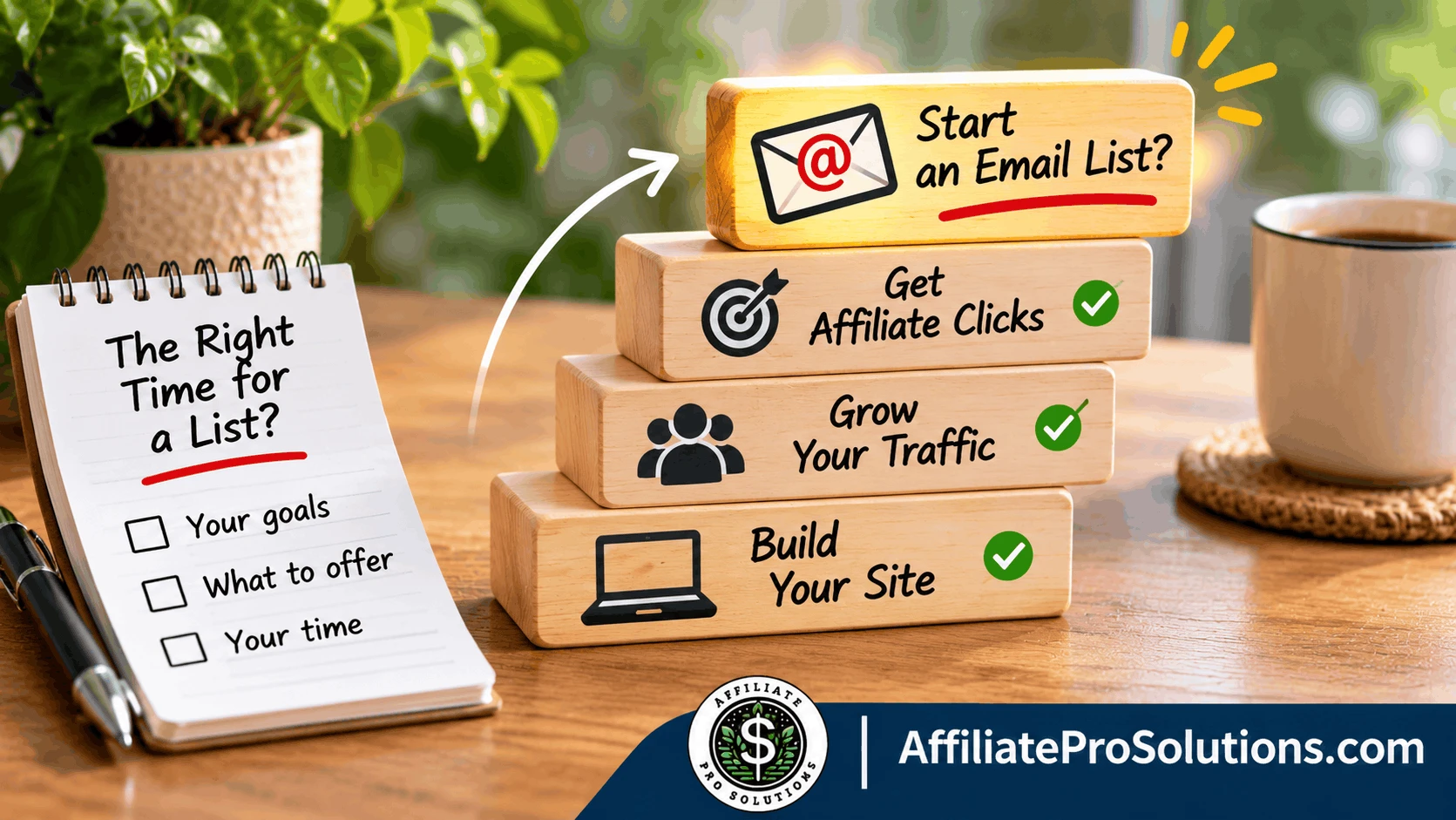
There’s no particular stage in affiliate marketing where I’d say you suddenly need to start collecting email addresses. Some website owners introduce a newsletter quite early, while others spend years promoting affiliate products without ever building a list.
I think it comes down to what you want to offer your readers and how much time you’re prepared to spend managing it.
Here are a few things I’d keep in mind before getting started.
Signs You Might Be Ready to Start an Email List
- People are visiting your website regularly. If you’re getting visitors who are interested in your articles, you already have an opportunity to invite them to subscribe. You don’t need thousands of monthly visitors to get started.
- You know what you’d send subscribers. Maybe you want to share new articles, offer tips or send an occasional roundup of information related to your website’s subject. The important thing is having a reason for someone to subscribe.
- Your readers have questions you could answer through email. If people are leaving comments or asking similar questions, a newsletter could be another way to help them.
- You have time to manage it properly. Even a small email list needs attention. You’ll have to deal with subscriptions, write messages and keep the information you’re sending accurate.
- You’re happy to take on another task. If you enjoy writing emails and communicating with readers, there’s nothing wrong with starting early. But if it feels like another job you don’t have time for, there’s no reason to force yourself into it.
Do You Need a Certain Number of Visitors or Affiliate Sales?
No, there’s no minimum number of website visitors or affiliate sales you need before starting an email list.
You could have 50 visitors a month and decide to offer a newsletter, or you could have several thousand visitors and prefer not to collect email addresses at all.
The same applies to affiliate commissions. You don’t have to wait until you’ve made your first sale, although knowing which articles and products attract interest could help you decide what to share with subscribers.
I’d be more concerned about having something worthwhile to send than reaching a particular traffic or earnings figure.
What If You’re Worried About the Cost?
You don’t necessarily need a paid subscription to get started with email marketing.
Some email marketing services offer free plans that allow you to collect a limited number of subscribers and send newsletters without a monthly fee.
For example, I’ve covered one of these services in my GetResponse Review, where I explain its features, free account and what you should know before considering a paid plan.
Just remember that free plans have restrictions, and the features or subscriber limits can change.
And even if the service doesn’t cost you anything, you’ll still need to spend time managing your list and creating emails.
So, When Would I Start?
I’d start when I had a good idea of what my subscribers would receive and felt comfortable adding email marketing to my regular website activities.
You could begin with a simple newsletter offering updates when you publish something new. There’s no need to promise weekly emails if you know you won’t have time to write them.
And if you’re happy concentrating on your website and affiliate content for now, that’s perfectly fine too.
Building an email list is a choice, not a requirement for earning affiliate commissions.

Frequently Asked Questions – FAQs
Yes, it’s possible to start promoting affiliate products without paying for an email marketing service. Many affiliate programmes are free to join, and you don’t need to collect subscribers to earn commissions.
However, running your own affiliate website can involve costs such as hosting and a domain name. You should also check the requirements of any affiliate programme before applying, as some have specific conditions for accepting new partners.
Not necessarily. Having an email list doesn’t guarantee that you’ll earn more affiliate commissions.
Your earnings depend on several things, including the visitors you attract, the products you’re promoting, how many people click your affiliate links and how many referrals turn into qualifying sales.
An email list might help you earn additional commissions from interested subscribers, but you can still earn money through your website without one.
Yes, social media can be another way to bring people to your affiliate website.
For example, you could share an article on Facebook, Pinterest or LinkedIn and encourage interested readers to visit your website.
Some affiliate programmes also allow direct affiliate links on certain social media platforms, although you’ll need to check their rules and the platform’s requirements before doing so.
You should also clearly disclose your affiliate relationships when promoting products.
I’d only start collecting email addresses when I had a good idea of what I was going to send my subscribers.
There’s nothing wrong with starting a small list early, even if only a handful of people sign up.
However, if you offer a newsletter, explain what subscribers can expect and how often they might hear from you. Make sure you also have a proper way to manage their details and unsubscribe requests.
I wouldn’t collect email addresses just because you think you might want to use them someday.
Absolutely. You don’t have to decide everything when you first create your website.
You can publish articles, promote affiliate products and build up your content before introducing an email newsletter.
When you’re ready, you can add a subscription form, explain what readers will receive and invite interested visitors to sign up.
Your existing articles can then help attract potential subscribers, even if those articles were originally published long before you started collecting email addresses.
My Experience With Affiliate Marketing Without an Email List
I’ve been involved in affiliate marketing since 2014, and over the years, I’ve learned that there’s no single way everyone has to run their website. We are all different.
Here on Affiliate Pro Solutions, I don’t currently have an email list. Instead, I’ve chosen to put a lot of my time into researching products, writing detailed reviews, publishing informational articles and keeping my existing content up to date.
I know the advantages of building an email list, and I can certainly see myself introducing one in the future. Being able to contact readers who are interested in my articles and recommendations is something I’d like to consider.
But I also know that running a newsletter takes commitment. If I’m going to ask someone to give me their email address, I want to have something worthwhile to send them and enough time to do it properly. At the moment, I simply don’t have the time to give it the attention it deserves.
I’m comfortable with how I’ve organised my website activities, and email marketing isn’t something I’ve decided to add at this stage.
My advice is to consider what you can manage and what you want your website to offer. An email list may become part of your plans later, but there’s no reason to introduce one just because other affiliate marketers tell you to.
Final Thoughts
If you’ve been putting off starting affiliate marketing because you think you need an email list, I hope this article has helped clear things up for you.
You can certainly earn affiliate commissions without collecting subscribers, and there are plenty of ways to promote products through your website. What’s important is giving people information they can use, recommending products that are relevant to their needs and making it easy for them to take a closer look if they’re interested.
As I’ve explained, email marketing has its advantages, and I wouldn’t dismiss it altogether. But it’s something you can introduce when you feel ready, rather than another job you need to take on straight away.
I’d concentrate on making the most of the time you have available and building a website you’re happy with. You can always reconsider an email list later if you decide it’s worth your time.
I’d love to hear your thoughts. Are you currently doing affiliate marketing without an email list, thinking about building one later or still wondering if you need one? Let me know in the comments below, and I’ll be happy to offer some advice based on your situation.
Chris
Wealthy Affiliate
This is where my journey into the online world began, and it’s still the community I use for learning, tools, and support while working on my own projects.

About Chris Towers – Follow Me

My name is Chris Towers, and I run Affiliate Pro Solutions. I work with websites, content, and affiliate projects, and this website is where I share what I’ve learned from doing that work.
Most of what I write about comes from researching hosting companies, tools, and platforms that people use when building websites or trying to earn online. I look at how things are set up, what’s included, and where people often get caught out later.
I’m not connected to the companies I review beyond standard affiliate partnerships. This site does include affiliate links, but the aim here is to explain how the services work rather than push anyone into a decision.
You’ll find me on
Related
- Affiliate Marketing Without an Email List
- Affiliate Marketing Not Making Money? Here’s What to Check First
- How to Narrow Down a Niche For Affiliate Marketing
- What Is An Affiliate Tracking Cookie? What Happens After The Click

- How Do I Write My First Affiliate Product Review? Practical Tips You Can Use Right Away

- How To Build Trust As An Affiliate So Readers Believe Your Advice

Just to be open with you, this page includes affiliate links. If you click on one of these links and make a purchase, I earn a small commission. There is no extra cost to you at all. This simply helps support the content I share here. Thank you for your support, it really is appreciated.