
Topic – Business Management
Post Reading Time – 20 Minutes
Have you ever put your heart and soul into a post, hit the publish button, and then simply watched it disappear into an oblivion? It gets nothing in the way of comments, there are no shares, not even a glance past the first few lines. Well, I know that feeling too, and it pushed me to learn how to create engaging content so people actually want to keep reading what I have to say!
Just know though, this does not come with luck, you need to connect with people in a genuine way and give them a reason to keep reading.
Why It’s Worth Learning How To Create Engaging Content.
Producing engaging content will keep your readers interested and encourage them to respond, share it, and even stay until the end.
If people lose interest or feel disconnected, they just leave without a second thought. But when your writing connects, solves a problem, or even makes someone smile, they come back for more.
That’s how real growth starts, and that doesn’t matter if you’re running a blog, sending newsletters, or simply posting on social media.
See the Full Checklist For Creating Engaging Content Before Publishing here!
Since I learned how to create engaging content, I’ve seen better SEO results over time, I have more loyal readers, and lots of encouraging feedback that keeps me motivated. So, take the time to understand your readers and give them something that feels worth reading.
What You’ll Learn From This Post
- Starting with a clear purpose – Always know what you want readers to get from your post. If you’re not sure yourself, it’ll show up in your writing.
- Understanding your audience – The better you know who you’re writing for and what they care about, the easier it is to connect with them.
- Keeping things organised and easy to follow – Have a good layout with headings, lists, and visuals to help people stay interested.
- Writing with emotion – Share some real stories and personal moments when you can, as that’s what makes people remember you.
- Always give something useful – Offer clear steps or ideas that readers can take away and use straight away.
Summarize This Content Using AI

Start Your Training
- Build Your Website & Earn Revenue
- Support, Tools & Training Included
- Complete with Business HUB
- Artificial Intelligence Writers
- My Personal Support
- No Risk Free Starter Account
- FREE BONUS AI CREDITS
TL;DR
How to create engaging content
Engaging content keeps people interested long enough to actually read what you write instead of just scrolling past. This post goes through the different ways to make your content grab people’s attention, hold interest, and give readers something worth their time. Concentrating on these elements will help to keep your posts feel more useful and that keeps people reading deeper into your site.
Before we get into things here, it’s important to know that every post or video that has a good impact starts with a clear purpose.
Before I start writing, I always ask myself, “What do I actually want readers to get from this?”
Sometimes I want to help people fix a problem, give them a bit of motivation, or simply give someone a reason to smile. Whatever the goal is, being clear about it keeps everything focused.
Here’s a simple way I recommend you stay on track:
- Decide what you want your readers to take away — knowledge, ideas, or solutions.
- Think about how it helps them. If it doesn’t meet a real need, it’s hard to keep them interested.
- Write that goal in one sentence and keep it visible while you work on your content.
When your goal is clear, every story, statistic, or image supports the bigger message, and readers notice this.
Getting to Know Your Audience
The best content always starts with knowing exactly who’s on the other end of it. I know I’ve made the mistake before of just assuming I knew what my audience cared about, only to be met later on with complete silence.
Taking the time to dig deeper and doing a bit of research will always pay off in the end.
Take a look at your analytics for some clues — what posts are getting the most reads, and what keywords are people searching for?
Ask questions too. Surveys, polls, DMs, and comment sections are full of useful feedback if you take the time to listen.
Check forums, groups, Reddit, or Quora to see the real questions people are actually asking.
Personally, I like to think of a single reader, maybe even someone I know, while writing. This helps me stay human and keep my tone genuine instead of sounding cold or distant. When you write with your readers’ goals, struggles, and everyday life in mind, they notice and they’ll stay.
How To Create Engaging Content With the Right Focus
I find that content usually flops when it tries to do too much all at once. The trick is to concentrate on one thing and write it out for a specific reader. Once you know what they actually want, everything else falls into place.
Here are a few simple user needs I like to keep in mind when I’m planning what to write:
- Update me. What’s going on right now?
- Educate me. Teach me something either useful or new.
- Give me context. Tell me why it matters.
- Inspire me. Give me a reason to act or think differently.
- Help me. Walk me through a problem step by step.
- Connect me. Remind me I’m not the only one feeling this way.
- Entertain me. Make it fun or enjoyable to read.
I usually pick one of these for each post that I write, and sometimes two if I think they’ll work well together, like teaching and inspiring.
By having this focus, it keeps your writing in good shape, to the point, and helps your readers find exactly what they came for.
How To Create Engaging Content With Strong, Clear Titles
I always try to spend a little extra time working on my titles because a plain one usually means fewer clicks, no matter how good the post is. Over time, I’ve picked up a few simple habits that help me write stronger titles.
- Use your main keyword in a way that feels natural. It helps both with search and makes the topic clear.
- Keep it under about 60 characters so it shows properly in the search results.
- Always concentrate on giving value — what will the reader actually get from clicking and reading your content?
- Try and add a bit of emotion or curiosity, something that makes people want to know more.
- Stay honest. Try to avoid clickbait or overpromising, because once you lose trust it’s gone for good. It’s damn hard to win it back again.
For practice, I sometimes write ten headline ideas before choosing the one that feels right. If I’m still unsure, I’ll ask a friend or share them in a writing group.
A second opinion (and sometimes a third) often helps you see which title really stands out.
Additional Business Management Info & Resources
How To Create Engaging Content That Hooks Readers Right Away
The opening of your post needs to be more than just saying a quick hello. This is your first real chance to convince readers to stay and read what you have to say.
In those first couple of sentences, try to show them the following three things:
- What the post is about
- Why it matters to them and what they’ll get from reading it
- What they can expect to learn or take away
I like to keep mine personal and straight to the point. A good introduction doesn’t need to be fancy but just friendly, honest, and interesting enough to make someone want to keep reading.
Keeping It Organized and Easy To Follow
Well-presented content is always easier to read and keeping things organized will help your message stick.
I like to break things into clear sections, each with its own descriptive heading.
For example, if I’m writing a guide like this one on ‘how to create engaging content’, I’ll include sections on knowing your audience, choosing a good topic, and structuring your message.
Try to keep one main topic per section — it makes things easier to follow.
Use headings that describe what you’re talking about.
Add bullet points or numbered lists when you’re explaining steps or tips.
Keep the most important information near the top, especially online.
If an idea feels like it needs its own section, it probably does. Readers appreciate being able to skim through and still get the main message.
What you shouldn’t do is try to cram everything into one huge block of text or jump between unrelated ideas.
This will make your readers lose interest. Long, messy paragraphs can look overwhelming, and once someone clicks away, they very rarely come back again.
Making It Scannable and Easy To Read
I never enjoy reading big walls of text online, (in fact, I hate it) and I’m sure your readers feel the same way. Short paragraphs always work better.
Here’s what I usually do:
- Keep paragraphs short — just a few lines, two to four sentences at the most.
- Use bullet points whenever possible. They’re much easier on the eyes.
- Break longer information into tables or quick lists that are easy to skim over.
- Bold the most important words or sentences, but only when it really adds value. Too much bold text can have the opposite effect.
Having this kind of layout makes it easy for people to find what they need, and that’s good for SEO and for keeping your readers around longer.
How To Create Engaging Content Using Helpful Visuals
Images play a big part in keeping your readers interested and adding good value to your post. I use visuals to break up the text, show steps clearly, and explain data in a simple way.
This is what usually works for me:
- Add around two or three visuals for every 1,000 words. Not too few, and not too many.
- Use screenshots when you’re explaining a tool or platform. If you can, create your own.
- Add charts or infographics when sharing data or statistics.
- Photos, even simple ones, are really good for showing step-by-step examples or before-and-after results.
Before adding any images to my content, I write a quick sentence so readers know what they’re looking at. Then I include a short note afterward explaining why it’s there or what to notice.
This keeps things clear, helps SEO, and makes the post flow naturally.
Here’s a simple example of how visuals can help bring an idea to life.
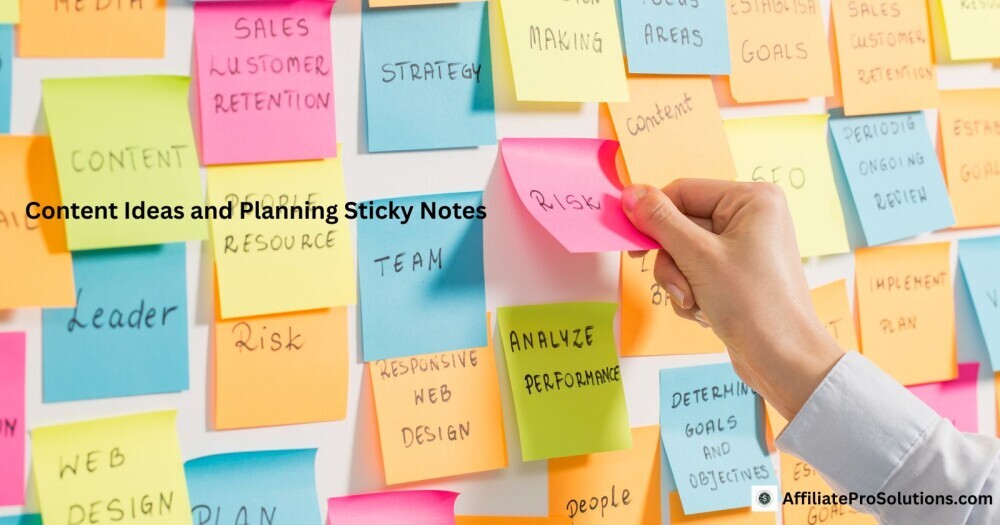
This whiteboard with sticky notes shows how planning and structure come together visually.
It’s the same idea I follow when outlining a post and organizing my thoughts before writing. This helps everything flow better.
If you want to see how I actually create the visuals I use in my content, I’ve written a separate Wealthy Affiliate Image Studio review where I show how I generate images while I’m writing, test different styles, and place my visuals naturally into longer posts without relying on stock photos.
Picking the Right Format and Posting Time
When you’re planning your new content, try to think about how and when you’ll share it. Timing and format can make a big difference in how people respond.
If your audience tends to check in during lunch, keep things light or post short summaries. Longer guides or case studies work better on weekends or evenings when readers have more time.
Quick tip lists and updates are a good choice for busier hours.
Detailed tutorials, how-to guides, and opinion pieces fit well when your audience is relaxed and has time to concentrate.
Videos and podcasts are really good for times when people are commuting or multitasking.
If you’re a little unsure what works best, ask your readers when they prefer to catch up with your content, or check your analytics to see when your activity peaks.
How To Create Engaging Content With Clear Takeaways
The posts that get shared the most are usually the ones where readers can take some kind of action straight away or see an obvious benefit.
Here’s what I always try to do:
- Include practical steps instead of just writing out theory.
- Add a real example from my own experience or from someone else’s.
- Share some templates, checklists, or downloadable resources when I can.
- Sum up the main ideas at the end of each section so readers don’t lose track.
People love going through content that saves them time or makes life easier.
Being specific really helps. Instead of saying something general like write better headlines, I’ll give real examples or simple formulas that have worked for me.
If you want to look a little more into things, this in-depth guide on how to create engaging content gives you some more ideas which you can try alongside what I’ve told you here.
Building Credibility and Trust With Your Readers
Trust doesn’t come overnight, so I always try to make sure to back up what I say. Here’s what helps me:
- Use reliable sources and link to official research or experts that you genuinely follow.
- Share real results, numbers, or screenshots when you can.
- Add quotes or testimonials from other people, as long as you have their permission.
- Keep self-promotion low and concentrate on helping people first.
It’s also worth checking your links and references from time to time.
Outdated or broken sources can make a good post feel careless, and fresh, up-to-date information always makes you look more professional.
When you show proof and stay honest, people notice. That’s what builds long-term trust and keeps readers coming back.
Connecting Emotionally and Writing With Empathy
If you want people to stay interested in what you have to say, they need to feel something. For this, I try to tune in to what my readers might be dealing with. Think of things like stress, excitement, frustration, or even hope. Then I write in a way that matches that mood.
Here’s what helps me do that:
- Use words and examples your readers actually use.
- Share real stories, even the ones that include mistakes or lessons learned.
- Let your personality come through, maybe with a bit of humor or a friendly nudge.
People remember content that feels real a lot more than something overly polished or robotic.
Writing with honesty builds connection, and that’s what makes readers want to come back.
Being Authentic and Sharing Real Experiences
I’ll be honest and say not every story I share is a success, and that’s perfectly fine for me.
Readers often connect more with the tough moments people go through rather than the easy ones. So, if you’re comfortable, don’t hold back from talking about the times you got things wrong and what you learned from it.
Being open like that builds trust and shows there’s a real person behind the words.
One of my most read posts was actually about a content launch that completely flopped. But people appreciated my honesty, and many went on to share their own stories in the comments.
It just proves that being real connects more than trying to look perfect.
Encouraging Feedback and Real Interaction
The conversation shouldn’t stop once you hit the publish button. A simple, friendly call to action at the end of your post shows you genuinely care about what your readers think.
Here are a couple of questions I like to use:
- What’s your best tip for creating engaging content?
- What’s one thing you still struggle with? Let me know so I can help.
Of course, I use these as an example here relevant to the post I am writing for you now. Relevancy is important, so try to sign off in a way that encourages your readers to drop their thoughts on what they’ve just read!
Also, I always take the time to read and reply to every single comment or message. People appreciate being heard, and those conversations often lead me to new ideas for my future content.
How To Stand Out and Make Your Content Different
It’s always worth knowing what’s already out there before you start writing. I usually check the top Search Engine Results Pages (SERPs) from Google, Bing and so on, or spend a little bit of time in forums to see what other people are talking about. I then look for gaps or a fresh way to approach the subject.
In my opinion, there is no point in simply copying what’s already been said.
Sometimes standing out is as simple as:
- Sharing a new story or example that nobody else has mentioned.
- Explaining steps with clearer visuals or simpler examples.
- Focusing on a smaller, more specific audience. For example, instead of How To Write Engaging Content, go with How To Write Engaging Content For Busy Parents.
Your own experience, voice, and ideas are what make your content different.
Even in a crowded topic, your personal approach and ideas can make people stop and pay attention.
Wrapping Up With a Clear Next Step
Never leave your readers at a dead end. And I mean, Never!!!
Always give them a simple next step to take. I like to end each post by suggesting something small. This could be trying out one of the tips I mentioned, checking out a useful resource, or joining my email list if they’d like to stay in touch.
It could also be something as simple as leaving a comment with their thoughts and opinions.
Just keep things simple and genuine, not pushy. One clear call to action for each post usually works best. If your content helps, inspires, or teaches something useful, people will often want to come back for more.
My Final Checklist Before Hitting Publish

Before I hit that publish button, I always take a quick minute to go through this list.
This helps me catch small things I might’ve missed and makes sure the post feels right before it goes live for the people to read.
| What I Check | My Thoughts |
|---|---|
| Have I made the purpose clear? | If I don’t know what I’m trying to say, my readers definitely won’t. Every post needs one clear point. |
| Do I really understand what my readers need right now? | It’s easy to guess, but I try to make sure I’m actually answering their questions or solving something real. |
| Does the post stay focused? | I read through once to see if I’ve drifted off-topic. If I have, I tidy it up. |
| Are my headings and paragraphs easy to follow? | I like to check that it looks clean and is easy to skim, especially for people reading on phones. |
| Did I include images or breaks in the text? | Long text feels heavy, so I make sure there are enough images, lists, or quotes to break things up. |
| Are my tips or advice actually useful? | If someone can’t walk away and do something with it, it needs more detail. |
| Have I backed up what I’m saying? | I check for stats, sources, or examples to prove the point. It keeps things trustworthy. |
| Did I add something personal? | A short story, an honest moment? This makes the post feel real. |
| Did I finish with a next step? | I always give readers something to do next, even if it’s just leaving a comment. |
| Does everything flow nicely? | A final read-out-loud test helps me to catch anything clunky or repetitive. |
If everything here feels good, I know I can publish it with confidence.
Frequently Asked Questions – FAQs
These are a few of the questions I get asked most often about creating engaging content.
A few things can turn readers away fast. The more common ones are writing only for yourself, using boring headlines, or posting long walls of text with no breaks. Forgetting to use images or skipping the chance to start a conversation can hurt too.
I like to go back over my older posts every few months, especially if they’re still getting traffic. Updating any statistics, adding new examples, or fresh images can give a nice boost in both engagement and your search rankings.
Longer posts can perform well if they’re genuinely helpful, but clarity always has to come first. Some topics work best in 400 words, others in 2,000. At the end of the day, it’s the value that counts, not the length.
That really depends on your readers. Blog posts, videos, podcasts, and infographics all work if they fit your audience’s habits. Try different types of content and see what people enjoy the most.
Keep an eye on your analytics. Look at things like time on page, scroll depth, and shares. Comments and messages are also good signs that people care about what you’re writing. I often ask my readers directly what they liked or what they’d change, and their feedback always helps me improve on things.
A Few Extra Tips To Keep Your Content Engaging
OK, as we start to wrap this up, here are a few extra things I want to quickly share with you that always help me keep my posts interesting and fresh:
- Keep it conversational. Write the way you’d speak to a friend. It makes your content feel more personal and much easier to read.
- Don’t be afraid to try something new. A quick quiz, small challenge, or asking your readers for their stories can make your post more interactive.
- Show a bit of behind-the-scenes. People love seeing the process, not just the finished result.
- Add short recaps for readers skimming through. Sections like “Quick Summary” or “Main Point” help people catch the important bits fast.
- Update your resources often. Broken or outdated links can drive readers away quickly. Try to keep things up to date so your content stays reliable.
Of course, you don’t have to use every single one of these in every post you write.
Just keep them in mind and use what fits naturally. Over time, you’ll get a feel for which ones make the biggest difference for your readers.
My Experience and Advice on Making Content Worth Reading
Over the years I’ve learned through a lot of trial and error that spending a bit more time on each post always pays off in the end. When I concentrate on making my content clear, helpful, and genuinely interesting, the results follow. I get more comments, more shares, and stronger relationships with my readers.
The truth is, creating content that people actually want to read and share isn’t luck. You need to understand what your readers care about by listening to their feedback, and putting in the effort to make every post worth their time.
From my own experience running Affiliate Pro Solutions and connecting with my readers across different platforms, I’ve seen how small improvements can completely change how people respond. It’s proof that the extra care you put in makes a difference.
If you ever feel stuck, take a look at what’s working for other people, but always bring it back to your own style and what feels right for your readers. Keep learning, stay consistent, and don’t be afraid to test out some new ideas.
And remember, people can tell when something is written with genuine care. That’s what keeps them coming back.
I hope this post on how to create engaging content has helped you out!
Thank you, and please leave your thoughts and comments below.
Chris
Wealthy Affiliate
This is where my journey into the online world began, and it’s still the community I use for learning, tools, and support while working on my own projects.

About Chris Towers – Follow Me

My name is Chris Towers, and I run Affiliate Pro Solutions. I work with websites, content, and affiliate projects, and this website is where I share what I’ve learned from doing that work.
Most of what I write about comes from researching hosting companies, tools, and platforms that people use when building websites or trying to earn online. I look at how things are set up, what’s included, and where people often get caught out later.
I’m not connected to the companies I review beyond standard affiliate partnerships. This site does include affiliate links, but the aim here is to explain how the services work rather than push anyone into a decision.
You’ll find me on
Related
- How To Design Your First Branded Business Website That Helps People Trust You Faster

- How To Create Engaging Content That People Actually Want To Read
- FAQs Page Examples That Actually Help Your Visitors
- The 80 20 Rule For Time Management – Get More Done
- Time Management Tips For Working At Home – Get More Done
- What Is The 80 20 Rule About? – Learn How to Apply It


Just to be open with you, this page includes affiliate links. If you click on one of these links and make a purchase, I earn a small commission. There is no extra cost to you at all. This simply helps support the content I share here. Thank you for your support, it really is appreciated.
This was a fantastic read, Chris!
What stood out to me most was how clearly you break down the real reasons content succeeds – or completely flops. Your emphasis on understanding audience needs and staying focused on one clear purpose is something many creators overlook, yet it makes all the difference.
I also appreciated your reminder that engaging content isn’t about luck but about intention, structure, and genuine connection.
The sections on writing with empathy, adding personal stories, and using visuals effectively were especially helpful. It’s easy to forget how much small improvements – like scannable formatting or clearer titles – can boost engagement and keep readers around longer.
Your checklist at the end is a great touch and something I’ll start using before publishing my own posts. Thanks for sharing such practical, actionable advice.
This is the kind of guidance creators at any level can benefit from!
Hi there Andrejs, and thanks for taking the time to read the post.
I’m glad you found it interesting and beneficial. I’ve learned the hard way that most content falls flat on its face because it tries to do too much all at once, or it forgets who it’s actually speaking to.
So it’s nice to hear that the points on purpose, structure, and understanding your readers came across clearly for you.
The parts you mentioned about adding personal stories and writing with a bit more honesty are things I’ve been working on myself for a long time, and you’re right, they do make a difference. Even some small tweaks like cleaner titles or breaking things up properly can keep people reading for much longer.
I’m also happy the checklist helped you out. It’s something I use every single time before I hit publish, so I hope it saves you a bit of time too.
Thanks again for the comment, and I appreciate you being here.
Chris
This is a fantastic guide for creating content that truly connects with an audience.
I especially appreciated the emphasis on understanding user intent before creation, it’s a step so many overlook.The section on leveraging storytelling and emotion is particularly powerful; it’s a reminder that even in digital marketing, human connection is the real key to engagement.
Thanks for putting together such a practical and insightful resource!
Hi Cian, thanks a lot for reading and for the comment.
I agree with you on understanding what people actually want before writing things out. It’s something I missed in the early days and it really does change how your content turns out in the end.
The storytelling and emotion side of things has been a big learning point for me too. I used to write more “informational” articles and they felt flat. Once I started sharing a bit more of my own experience and speaking the way I would in real life, the reaction from my readers changed.
I appreciate you saying the guide was useful. That’s exactly what I hoped for when putting it together.
Thanks again for taking the time to share your thoughts.
Chris