
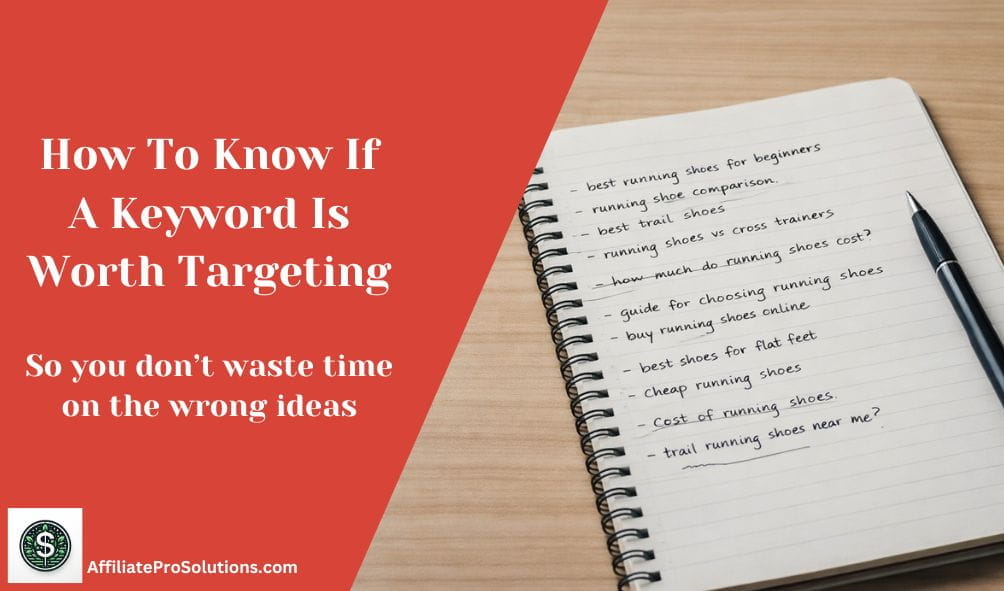
Topic – Keyword Research
Post Reading Time – 24 Minutes
A lot of people think creating content is easy, especially now with AI at their fingertips, but that changes when they’re faced with a long list of keyword ideas and no way to judge which ones are actually worth their time. Some look good on the surface. Others look tempting when they have big numbers next to them. But then you publish, wait, and realise nothing happens. No traction. No engagement. Just another page sitting there doing nothing. That’s usually when people start wondering how to know if a keyword is worth targeting before they spend hours writing, editing, and publishing content without a reason.
I’ve learned this the hard way too. I’ve gone after keywords that looked great inside the tools but had little to no connection to what my site was about, and I’ve ignored smaller phrases that could have brought in the right readers month after month. For me, keyword research starts with understanding how people search, then deciding if that search genuinely belongs on my site. When a keyword doesn’t sit right with your content, your audience, or the type of page you’re creating, it usually leads to wasted effort and disappointing results.
In this post, I’m going to show you how I decide whether a keyword deserves my attention, what I look for beyond search volume, and how I avoid going after ideas that look good on paper but go nowhere in practice. Everything here is based on my experience, mistakes included, so you can make better decisions without repeating the same ones.
What Makes a Keyword Worth Targeting
A keyword is worth targeting when it passes a few checks, and there is more to it than just looking at the numbers. A good keyword earns its place when it belongs on your site, it suits the page you’re planning to create, and lines up with what people expect to see when they search for it.
The first thing I look at is relevance. If the keyword doesn’t sit naturally with my content or the audience I’m trying to reach, it’s already a bad choice, no matter how popular it looks. Next comes the intent. I check what’s showing up in the search results to try and understand what people actually want, not what a tool suggests they might want.
Finally, I look at realism. Can my website compete with what’s already ranking, and do I have something useful to add? If the answer is no, I move on. A keyword is only worth targeting when it brings the right readers and gives the page a clear purpose. By the end of this post, you should be able to tell within a few minutes whether a keyword is worth targeting or not. See your full keyword targeting checklist here!
What You’ll Learn From This Post
- How to spot relevance early – How to tell if a keyword genuinely belongs on your site, instead of forcing it in just because it looks appealing in a keyword tool.
- Reading search intent properly – How to use the search results to understand intent and avoid creating the wrong type of page.
- How to look past search volume – Why numbers don’t automatically mean opportunity, and how to think more clearly about realistic traffic and attention.
- Judging competition without relying only on tools – What to look for in the results to decide if your site can realistically compete and add something useful.
- How to avoid wasting effort on the wrong keywords – A way to filter out ideas that look good on paper but don’t bring the right readers or serve a purpose.
Summarize This Content Using AI

Start Your Training
- Build Your Website & Earn Revenue
- Support, Tools & Training Included
- Complete with Business HUB
- Artificial Intelligence Writers
- My Personal Support
- No Risk Free Starter Account
- FREE BONUS AI CREDITS
TL;DR
How to know if a keyword is worth targeting
To know whether a keyword is worth targeting or not you need to be looking at how many people search for it and how much competition there is for that term. This post walks discusses different ways to evaluate both search volume and competition so you can decide if it’s a good one for the content you plan to create. Seeing these factors side by side helps you choose keywords that have a better chance of getting visits.
What Is Keyword Relevance and Why Does It Matter?
Relevance is always the first thing I take a look at when deciding whether a keyword is worth my time. It sounds obvious, but it’s also the easiest part to ignore when you’re staring at search numbers and popular ideas inside a keyword tool.
I’ll be the first to admit that I’ve gone after keywords in the past simply because they looked good, only to realise later they didn’t really belong with what my site was offering.
A keyword needs to sit naturally with the purpose of your site, the type of content you’re publishing, and the people you want reading it. If that connection isn’t there or clear, the page usually struggles from the very start. Visitors will land, they won’t see what they expected to see, and they’ll leave. That sends a very clear signal that something isn’t right.
I usually check relevance in two simple ways.
First, I ask myself whether the keyword genuinely makes sense for what I offer.
Second, I think about the kind of page it would need. Some searches expect an explanation, others expect a service page, and some expect something location based. If the keyword pushes you toward creating a page that feels out of place on your website, that’s a warning sign.
I also pay close attention to how the keyword fits within the rest of the site. When topics start drifting away from your main focus, the whole site starts to feel unfocused. Even the best numbers won’t fix that. Relevance always has to come before traffic.
How to Match Keyword Choice With Search Intent
Search intent comes down to one simple thing. What someone expects to see when they type a search into Google. This expectation matters more than any number inside a tool, and it’s where a lot of pages fail.
People often use similar phrases but mean very different things.
For example, a search like “best running shoes” can point in many different directions. Some people want comparisons. Some are maybe close to buying. Others are just looking for guidance before they decide anything.
When the page you create doesn’t line up with that expectation, it usually struggles, no matter how well it’s written.
Google explains how search results are shaped by intent and context, which is why looking at what already ranks is often the best way to understand what a search is really asking for.
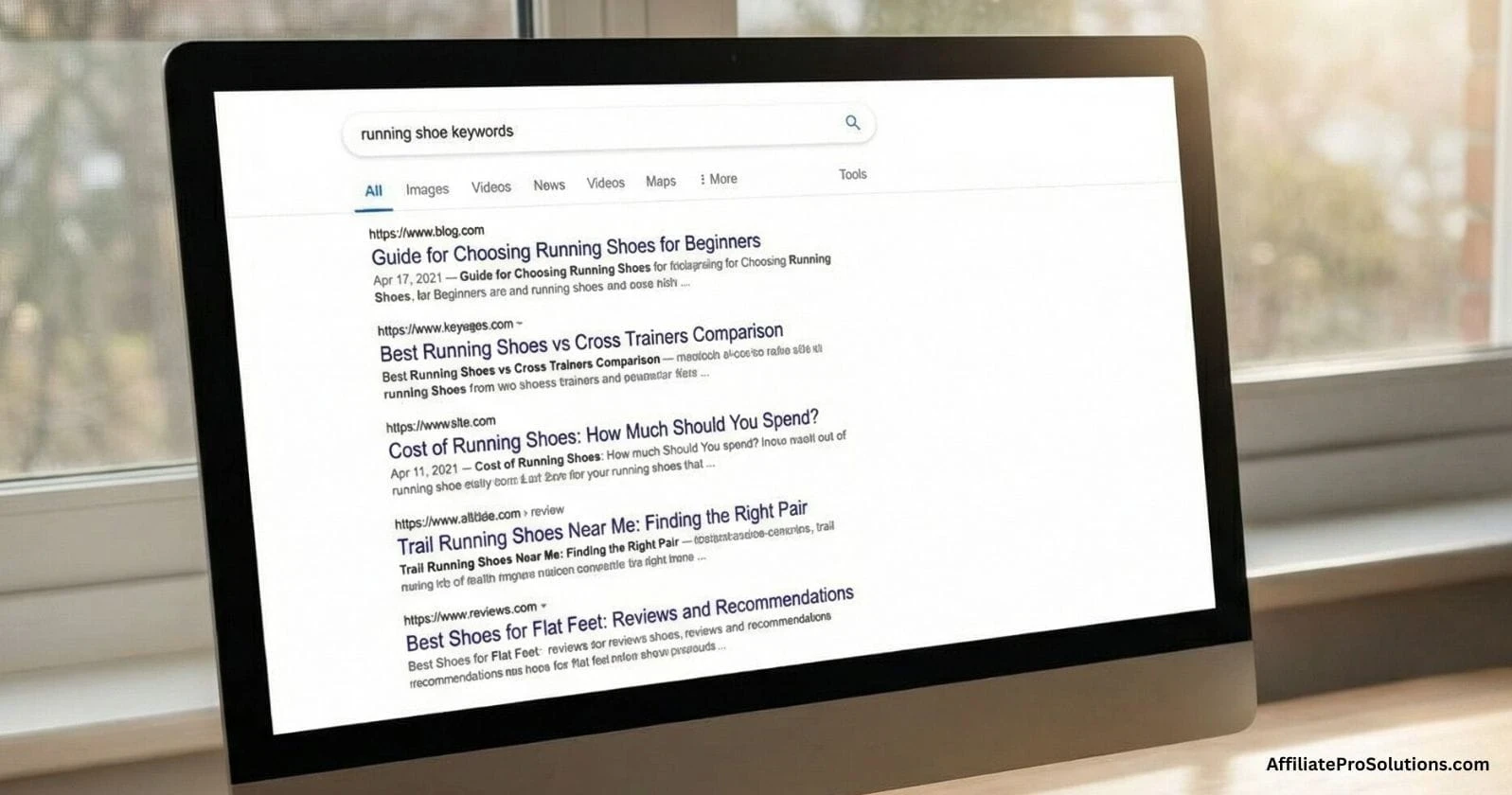
The way I check intent is straightforward. I open the search results in a clean browser and look closely at what’s ranking on page one. I’m not reading everything in detail but I’m looking for patterns. I want to know if the results are mostly guides, product pages, reviews, or brand sites.
That tells me what Google thinks the search is really about and what type of page has a chance of working.
There are a few intent types I keep in mind
- Informational searches where people want explanations, tips, or help.
- Commercial searches where people are researching various options but not at the buying stage yet.
- Transactional searches where people are ready to take action.
- Navigational searches where someone is trying to reach a specific site.
Once I see which type of intent dominates the results, I make sure my page follows that direction. If the results are detailed guides, a thin review won’t cut it. If product pages fill the screen, a long explanation piece will not do the job.
When the intent is clear and the page follows it, people will stay and read. When it doesn’t, they leave quickly and rarely come back again.
Measuring Search Volume the Right Way
Search volume is usually the first thing people pay attention to in a keyword tool, but on its own it doesn’t tell you very much. I used to put far too much attention into those numbers, assuming bigger automatically meant better. What I learned is that volume only matters when it connects to the right audience and gives you a realistic chance of being seen. If you want an example of how one tool shows volume and difficulty scores, see my Wordtracker review.
A keyword can show thousands of monthly searches and still be a bad choice. If it only loosely relates to your website, or if the search results are full of large, well established websites, that number won’t help you. In those cases, it’s better to concentrate on smaller, clearer searches where the expectations are tighter and the competition is lighter.
There are a few things I always keep in mind when looking at the search volume
- Search volume needs to be judged in context. What looks small in one niche might be perfectly healthy in another.
- Lower volume searches can still be very useful when the intent is clear and the visitor knows what they’re looking for.
- Some keywords only look good because they spike for short periods. Once that spike passes, the interest drops off, and the page stops getting attention.
- Keywords showing no volume are not really worth chasing unless you already know people are searching in ways the tools don’t track.
I try to think in terms of topic potential rather than just a single phrase. One well written page can pick up traffic from many related searches, questions, and variations that never show clearly in the tools.
That’s why I treat search volume as a reference point, and not something I base my decisions on.
Example of a keyword that looks good but isn’t worth it
Let’s say you find a keyword like “make money online” with a huge search volume. On paper it looks great, but when you check page one, the results are packed full with major sites, broad guides, and pages that try to cover everything.
Even if you wrote a perfect post, it would still be hard to get seen because the intent is mixed and the competition is heavy.
Now compare that with a phrase like the one for this post “how to know if a keyword is worth targeting before you create content.” Yes, the volume is smaller, but the intent is clear, the reader knows what they want, and your post can answer it directly. That’s the kind of keyword that attracts the right visitor and gives the page a clear job to do.
Understanding Keyword Difficulty Without Relying on Tools
Keyword difficulty scores can be helpful, but I never treat them as a final answer. Tools like Ahrefs, SEMrush, and Moz are making estimates based on things like site strength, link profiles, and basic page signals.
Yes, that’s useful, but it doesn’t tell us the full story.
I always take a few minutes to look at the search results myself. Tools can miss context, and they don’t always spot weak pages that are ranking simply because nobody has done a better job yet. This is where opportunities often show up.
When I check the difficulty properly, there are a few things I pay attention to.
I look at who is ranking. If page one is packed with large, well known sites that have strong link profiles across the board, that’s usually tough to beat. If I see smaller sites, forums, or mixed quality results, that’s a much more realistic place to work in.
I check the content itself. Pages that are outdated, shallow, or loosely put together leave room for improvement. If the information comes across as rushed or incomplete, that’s often a sign that the keyword hasn’t been handled properly yet.
I also pay close attention to intent. When the top results don’t clearly answer what the search is asking, ranking becomes more about being clear and direct. Pages that miss the point are much easier to replace.
For me, the best opportunities usually sit in the middle. A keyword with moderate difficulty and a results page full of average content is a much better target than something that looks easy but brings no value. If I can see gaps and know I can add something useful, that’s when a keyword is worth the effort.
Longtail and Shorter Keywords Working Together
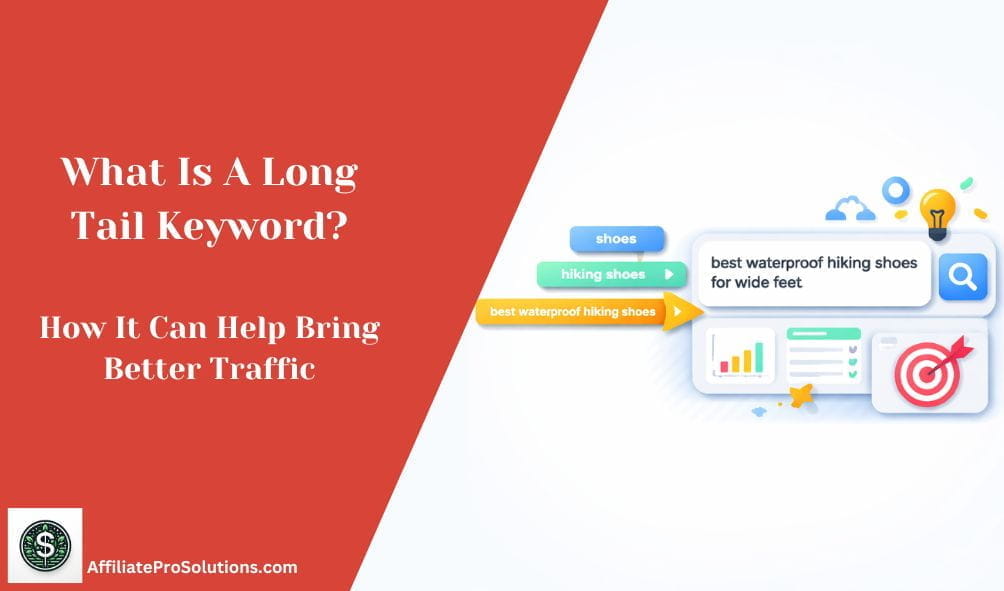
When I first started out, I was always looking for broad keywords with big numbers behind them. Things like credit cards or laptops always looked tempting, but my progress ended up being slow and frustrating. Those searches were vague, crowded, and they didn’t always bring the right people to the page.
Things only changed once I started concentrating more on longer, specific phrases. These searches tend to come from people who know what they’re looking for. They’re clearer, more direct, and usually much easier to compete with.
The visitors they bring are also more likely to read, stay around, and take action.
That said, I don’t ignore shorter keywords completely. They still have a place. I treat them as something to work toward rather than something to build everything around from day one. Most of my pages focus on longer phrases, while a smaller number of broader terms help shape the overall topic of the site.
Why longer phrases often perform better
- They usually show a much clearer intent. Someone searching for a detailed question is further along than someone typing a broad term.
- They’re more realistic to rank for, especially when a website is still growing.
- Visitors arriving through specific searches normally engage more because the page answers exactly what they were looking for.
Writing content around these phrases also helps your site stay focused. Pages link together more naturally, topics stay connected, and the site feels more consistent. As momentum builds, shorter keywords start to fall into place naturally, instead of being forced in too early.
Commercial Value and Buyer Signals
Some keywords are searched by people who are still thinking things through. Others are typed in by people who are much closer to making a decision. Knowing the difference is important, especially if your website earns through products, services, or referrals.
When I’m checking the commercial value, I pay close attention to the wording people use. Phrases that include words like buy, review, best price, or comparison usually come from someone who’s already weighing up their options.
These searches might not have big numbers behind them, but they bring visitors who are far more likely to take action once they land on the page.
I do look at cost per click inside keyword tools, but only as a rough signal. Higher bids often suggest there’s money behind the search, but that number on its own doesn’t tell us everything. I still check what’s ranking, what type of pages are showing up, and whether the keyword actually suits what I’m offering.
I also don’t ignore comparison and review-style searches.
Keywords that pit options against each other or ask for honest opinions usually come from people who are close to choosing. If your content helps them think clearly and answers the right questions, those visits are often the most valuable ones you’ll get.
Additional Keyword Research Info & Resources
Practical Competitor and SERP Checks to Decide If a Keyword Is Worth Targeting
No keyword decision is complete without looking at the search results themselves. Tools are useful for narrowing things down, but they don’t show you what’s really going on until you open the page and look with your own eyes. Before I commit to a keyword, I always check Google manually.
These are the main things I look for when scanning page one.
- Who is ranking – Are the results dominated by large, well-known sites, or are there smaller blogs, forums, and mixed-quality pages showing up? A mix usually means there’s room to compete.
- Content quality – I look at how much effort has gone into the pages that are ranking. Are they detailed and clearly thought through, or do they feel rushed and incomplete?
- Freshness and accuracy – Outdated pages or content that hasn’t been touched in years often signal an opening, especially if the topic changes or evolves.
- Clarity of titles and structure – Weak titles, vague headings, or poorly organised content often mean the keyword hasn’t been handled properly yet.
- What’s missing – This is a big one. I look for gaps. Are certain questions ignored? Are beginners left confused? Is troubleshooting skipped over? These gaps usually show you exactly how to improve on what’s already there.
If I can clearly see what’s missing or poorly explained, that’s usually a good sign. Even keywords that look competitive on paper can be worth targeting when the existing content doesn’t fully serve the search. The goal isn’t to copy what’s already ranking, but to do a better job of answering what people are actually looking for.
Organising Keywords and Keeping Things Clear and Focused
One of the easiest mistakes to make early on is treating every keyword as something that needs its own page. I’ve done this myself, and all it led to was a collection of thin pages that overlapped, confused readers, and didn’t really serve a clear purpose.
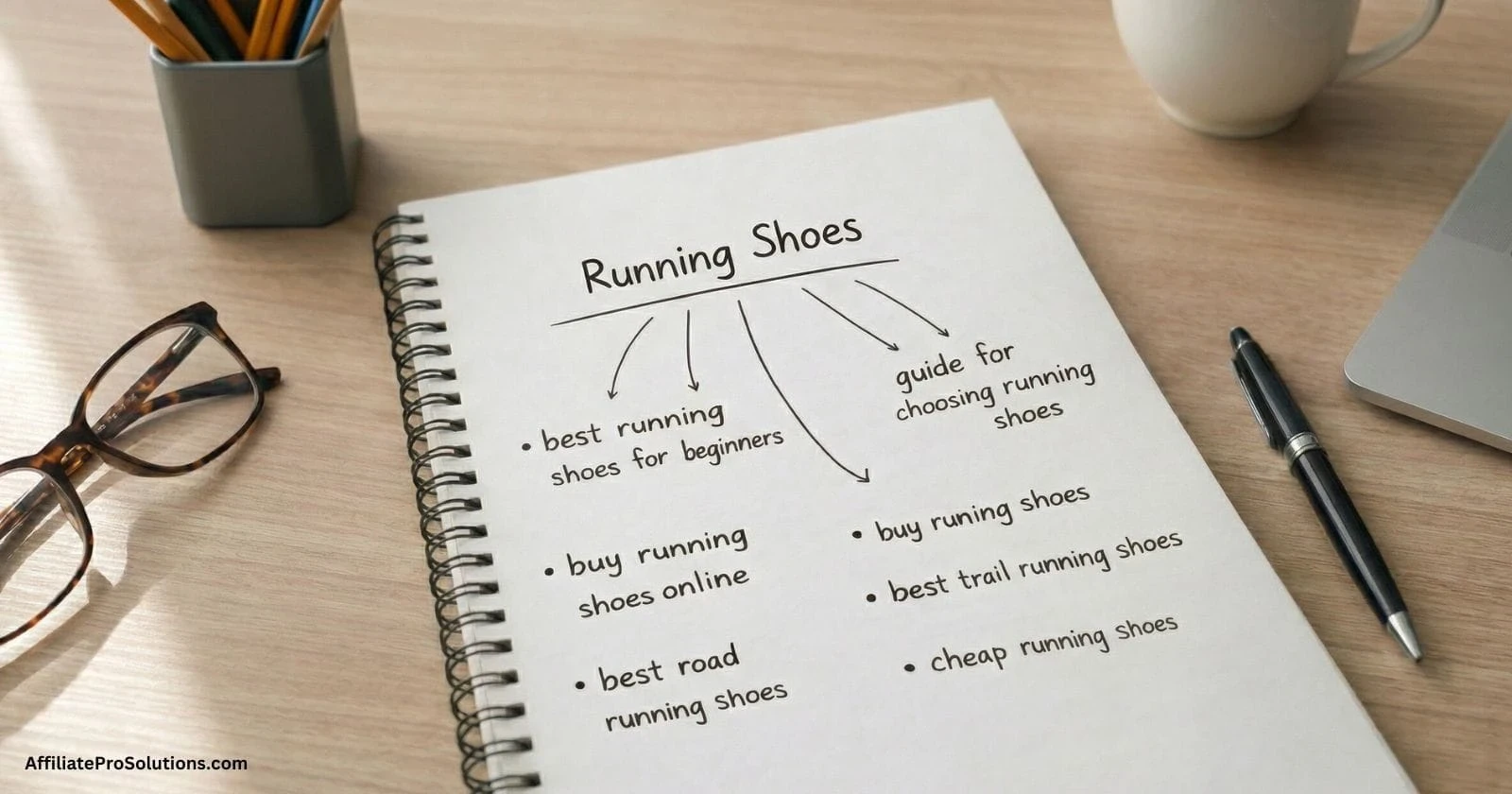
A much better way to handle this is to write each page around one main keyword, then support it with closely related phrases that naturally belong to the same topic.
This keeps the page focused and gives you room to properly cover what the search is asking for. When a page is built around a clear idea, it usually ends up showing up for a wider range of related searches anyway, even ones you didn’t plan for at the start.
This is far more effective than just spreading similar ideas across multiple weak pages.
I’m also careful not to mix too many different intents into one piece of content. When a page tries to explain, sell, compare, and guide all at once, it usually does none of them very well. Keeping the intent clear makes the page easier to write, easier to read, and easier for the search engines to understand.
Internal links play a big part here too. Linking related pages together helps everything sit in context and makes it easier for visitors to move through the website in a logical way. It also signals which pages matter most.
As for keyword use itself, forcing the same phrase into every sentence doesn’t help anyone. Writing naturally, using related wording where it is good to do so, and giving clear answers always does more for a page than repeating a keyword just for the sake of it.
How I Handle Keywords in Titles, URLs, and Images
I try to keep things straightforward when it comes to where keywords appear on a page. If a keyword matters, it should show up naturally in the title, the URL, and the main headings, without being forced or repeated for the sake of it.
These are the first places both readers and the search engines look, so clarity matters more than trying to be clever with the words.
With images, I look at describing what’s actually there. Alt text should explain the image in plain language and connect to the topic of the page where it makes sense. I don’t try to cram keywords into every image, because that usually reads awkwardly and adds no value.
The goal across all of this is consistency without overdoing it. When titles, headings, URLs, and images all point in the same direction, the page is easier to understand. If something starts to sound unnatural, that’s usually a sign to pull back.
Local vs. Global Keyword Decisions
This is something that often gets missed when people look at keyword data for the first time. If your website serves a specific town, city, or region, global search numbers don’t always mean very much. A keyword can look relatively weak on paper, but still be extremely useful if it brings the right people to your website.
When I’m dealing with location based services, I pay close attention to how people add places into their searches. That might be a town name, an area, a postcode, or phrases like near me. These searches usually come from people who already know what they want and are looking for someone close by.
Even when the numbers look small, local searches often bring far more relevant visitors. Someone searching for a service in their area is usually much closer to taking action than someone browsing a broad topic.
In those cases, I concentrate on creating pages that clearly serve each location rather than going after generic traffic. Real feedback from local customers also helps here. Reviews and comments tied to a place add context and trust, and they often line up naturally with the way people search.
Why Keyword Research Is Never Really Finished
Keyword research is an ongoing thing. Searches change, expectations change, and pages that were once first choice can slowly lose their place. That’s why I always keep an eye on how my content performs after it’s published, rather than treating the publication as the final step.
Every so often, I go back and check which queries a page is showing up for and how people are actually finding it. Sometimes a page starts appearing for searches I hadn’t planned for. Other times, interest goes away or the results page changes around it.
When that happens, I improve the content, add missing sections, or change things up so the page still answers what people are looking for.
I also revisit keywords when I add new content or change direction slightly on a site. What mattered a year ago might not be the case today. Some small updates like adding clearer headings, expanding on common questions, or adjusting titles can keep pages useful and visible without starting from the beginning.
Your Keyword Targeting Checklist for Choosing the Right Keywords

| Start with relevance and intent | A keyword only has its place if it clearly belongs on your website and suits the type of page you want to create. If the search doesn’t line up with what you offer or what visitors expect to see, it’s usually better to leave it and move on. |
| Treat search volume as context, not a target | Big numbers can be misleading. Volume only matters when it makes sense for your topic, your audience, and your website. Smaller searches will often bring more focused visitors, especially when expectations are clear. |
| Check the difficulty using tools and results | Difficulty scores are a reference, not something to base your decisions on. Always look at what’s actually ranking and see whether the pages are strong, outdated, unclear, or incomplete. Gaps are more important than scores. |
| Use longer phrases as your main building blocks | Specific searches normally come from people who know what they want and they’re easier to compete with. Broader terms can support your topic later, but most pages benefit from starting with clearer, more direct phrases. |
| Build each page around one idea | One main keyword supported by closely related wording keeps the page focused. Trying to cover too many ideas all at once usually weakens the result and makes the page harder to understand. |
| Think locally when your service is local | If your website serves a specific place, local searches often matter more than global numbers. Smaller location-based searches usually come from people closer to taking action. |
| Revisit your keywords after publishing | A keyword choice doesn’t stop mattering once a page goes live. Checking how pages perform and making small updates helps keep them useful as searches and expectations change. |
Frequently Asked Questions – FAQs
The first thing to check is relevance. A keyword only makes sense if it clearly belongs on your website and suits the type of page you want to create. If the search doesn’t line up with what you offer or what visitors expect to see, no amount of volume or tools will make it worthwhile.
A keyword is good when it brings the right people and gives the page a clear purpose. That means the search intent is obvious, the topic fits your website, and you can realistically compete with what’s already ranking. If it ticks all three, it’s usually worth your time.
Lower-volume keywords mostly come from people who know exactly what they’re looking for. These searches are clearer, easier to compete with, and more likely to bring engaged visitors. Even small numbers can be valuable when the intent is strong and the keyword fits your website.
Yes, but it’s better when there’s one main keyword supported by closely related phrases. When everything points to the same topic and intent, the page stays focused and often picks up traffic from multiple searches naturally. Trying to cover too many unrelated ideas usually weakens the result.
The keyword competition matters a lot. Even a relevant keyword won’t help if the top results are far beyond what your website can compete with. Looking at who is ranking and how well the pages answer the search often tells you more than a difficulty score on its own.
My Personal Experience With Keyword Targeting
When I first started working with keyword research, my process was far from organised. I tried to go after the big numbers, waited for results, got hacked off, and then moved on to my next idea far too quickly. I published my posts, but very little happened. After a while, and with some tuition from someone who knew what they were doing, I understood it was how I was choosing what to go after that was the problem.
Things started to get a little better for me once I paid more attention to the relevance and intent and stopped allowing keyword volume numbers to drive my decisions. That alone brought me better readers. Some of my most reliable traffic now comes from smaller, very specific searches that tools rarely show you.
AI has added another layer to all of this too. It can generate endless keyword ideas in seconds, which sounds helpful, but it also makes it easier than ever to go for ideas that don’t belong on a website. That’s why your judgement needs to matter more now.
Tools can suggest, but it’s experience that decides. The keywords that keep performing are the ones that genuinely serve the content and the people reading it.
One Last Thing About Tools and Resources
There are many keyword research tools available, and most of them can be useful in the right context. Platforms like Ahrefs, SEMrush, Moz, Ubersuggest, and Google Keyword Planner can all help you find ideas. I use them as references though, and I don’t base all my decisions on what I get from them.
The most useful step is still opening a browser and checking the search results yourself. Looking at what is already ranking tells you far more than a keyword score ever will. You can see what type of pages Google is showing, what questions are being answered, and where the gaps are.
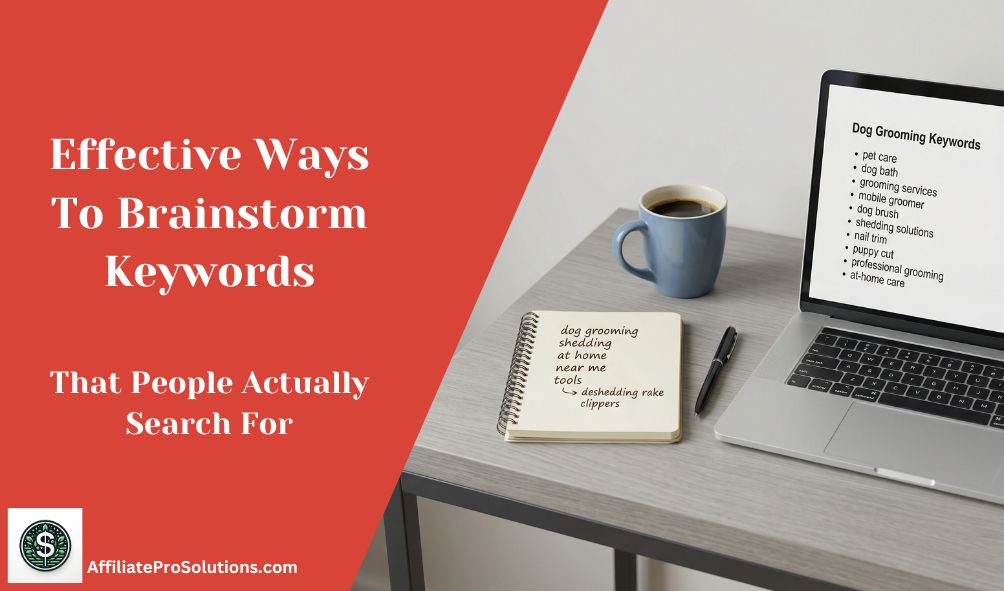
A lot of strong keyword ideas don’t come from tools at all. They come from knowing your content, paying attention to how people arrive on your site, and noticing the language they use. Analytics, search queries, and even comments will often highlight better opportunities than you’d ever see in a spreadsheet.
The same applies when you’re learning affiliate marketing itself. Reading how other people test ideas, run campaigns, and deal with problems gives context that tools alone can’t provide. I covered this in my AffiliateFix review, where those kinds of discussions are easy to see if you take the time to read through the threads.
At the end of the day, keyword tools can guide you, but judgement comes from understanding your website and the people reading it. When you keep that in mind, keyword decisions will get much easier.
I hope this post on how to know if a keyword is worth targeting has helped you out.
Thank you, and please leave your thoughts and comments below.
Chris
Wealthy Affiliate
This is where my journey into the online world began, and it’s still the community I use for learning, tools, and support while working on my own projects.

About Chris Towers – Follow Me

My name is Chris Towers, and I run Affiliate Pro Solutions. I work with websites, content, and affiliate projects, and this website is where I share what I’ve learned from doing that work.
Most of what I write about comes from researching hosting companies, tools, and platforms that people use when building websites or trying to earn online. I look at how things are set up, what’s included, and where people often get caught out later.
I’m not connected to the companies I review beyond standard affiliate partnerships. This site does include affiliate links, but the aim here is to explain how the services work rather than push anyone into a decision.
You’ll find me on
Related
- What Is A Long Tail Keyword? How It Can Bring Better Traffic To Your Site

- How To Know If A Keyword Is Worth Targeting Before You Create Content
- Effective Ways To Brainstorm Keywords That People Actually Search For
- How To Use Keywords In A Blog Post For The Best Results
- How To Search For Low Competition Keywords Easily
- How to Find Keywords for a Website and Get Seen Online



Just to be open with you, this page includes affiliate links. If you click on one of these links and make a purchase, I earn a small commission. There is no extra cost to you at all. This simply helps support the content I share here. Thank you for your support, it really is appreciated.
Thanks for the explanation, it helped me understand a little better how keyword research works.
I’m new to SEO, so I’m still not sure how to judge keywords that have high search volume but also a lot of competition. When you come across something like that, how do you decide if it’s worth trying or not?
Do you have a simple way to do it without getting confused with tools or numbers? An example of how you’d handle that choice would be really helpful.
Thanks for the comment.
When a keyword has a lot of searches but also a lot of competition, I don’t usually go after it, especially at the start. If the first page is already full of big websites covering the topic, it’s not usually worth your time.
What I do instead is open the search results and look at the pages themselves. If they all say roughly the same thing and answer the question clearly, I walk away. If the pages are thin, unclear, or don’t really answer what was searched, that’s when it becomes worth a closer look.
To keep it simple, I’d avoid tools at first and focus on more specific searches. They’re easier to judge, easier to write for, and you’ll learn much faster that way.
Thanks for this.
I’ve noticed sometimes that my pages are not ranking that great. They go up and down a lot and get very little traffic.
They might be outdated or not really answering the question properly. I need to look at this, I think, as that’s usually where there’s an opportunity to explain things better.
Thanks.
If your pages are moving up and down, it could be just a sign they need a closer look. Sometimes a small update or a better explanation of something is enough to improve things.
Just make sure the page really answers what someone searched for. That’s what matters the most.