
Topic – Search Engine Optimization
Post Reading Time – 32 Minutes
If you’ve been working hard on your website, publishing new articles, and regularly checking Ahrefs, you might be wondering “How long does it take to increase Domain Rating?”
After all, it can be really frustrating when you’re putting hours into your website, only to check your DR and find that the number never seems to move. So, are we talking about days, weeks, months, or even years?
The short answer to this is that you could start seeing some movement within a few weeks, although it might take several months or considerably longer.
You’ll often come across SEO articles suggesting that increasing your Domain Rating can take anywhere from three to twelve months. However, I want you to know that these are general estimates, and Ahrefs doesn’t provide any fixed timeframe for how quickly your score should increase.
The reason is simple. Domain Rating measures the strength of your website’s backlink profile, so how quickly your score increases depends largely on the websites linking back to yours.
For example, a relatively new website might see its DR increase after gaining followed links from several established websites. However, you could spend months publishing new articles and see very little movement if your website isn’t gaining additional referring domains that contribute to its score.
Your current Domain Rating also plays a part in all this. Ahrefs uses a logarithmic scale, which means that increasing your score generally becomes more difficult as your DR gets higher. I’ll explain how this works later in the article.
I’ve experienced some interesting changes with my own website, Affiliate Pro Solutions.
During a period when I wasn’t publishing any new articles, my Domain Rating increased considerably. Then, after remaining fairly stable for a while, it suddenly dropped, despite my website still showing a substantial number of backlinks.
I’ll explain what happened and what I learned from my own experience further down in the article.
How Quickly Can Your Domain Rating Increase?
To be honest with you, increasing your Ahrefs Domain Rating can take anywhere from a few weeks to several months, although it’s important to know there’s no fixed timeframe. Some SEO articles suggest three to twelve months, but your actual progress depends on the strength and number of websites linking back to yours.
If your website has a relatively low DR, you might see noticeable increases after gaining only a few followed backlinks from established websites. However, as your score gets higher, further increases generally become more difficult because Ahrefs uses a logarithmic scale.
It’s also worth remembering that publishing more articles won’t directly increase your Domain Rating. Your score depends on your backlink profile, particularly the websites providing followed links to yours.
My advice is to monitor your referring domains alongside your DR rather than concentrating on how quickly the number increases. That will give you a better understanding of your overall progress.
What You’ll Learn From This Post
- What Domain Rating Actually Measures – How Ahrefs calculates your DR and what the score tells you about your website’s backlink profile.
- How Long It Takes To Increase DR – Why some websites see increases within weeks, while others take months or longer.
- What Affects Your Domain Rating – The factors that influence your score and what you can do to help increase it naturally.
- Why New Backlinks Don’t Always Help – Why gaining more backlinks doesn’t necessarily mean your DR will increase.
- My Own Experience With Domain Rating – What happened when my website’s DR increased considerably and then suddenly dropped.
- How To Monitor Your Progress – What to check in Ahrefs and which other website statistics are worth paying attention to.
Summarize This Content Using AI

Start Your Training
- Build Your Website & Earn Revenue
- Support, Tools & Training Included
- Complete with Business HUB
- Artificial Intelligence Writers
- My Personal Support
- No Risk Free Starter Account
- FREE BONUS AI CREDITS
TL;DR
How Long Does It Take to Increase Domain Rating?
Increasing your Ahrefs Domain Rating (DR) can take a few weeks, several months, or even longer. There’s no fixed timeframe because your score depends on the strength of your backlink profile and the websites linking to yours. Lower DR scores are generally easier to increase because Ahrefs uses a logarithmic scale.
I’ve experienced this with my own website, where my DR increased considerably during a period when I wasn’t publishing new articles. However, it later dropped quite suddenly, despite my website still having a substantial number of backlinks.
What Is Ahrefs Domain Rating?
Domain Rating, usually shortened to DR, is a metric developed by Ahrefs that measures the strength of a website’s backlink profile. In other words, it gives you an idea of how strong your website is in terms of the links pointing back to it from other websites.
Ahrefs calculates this using a scale from 0 to 100, with higher scores indicating a stronger backlink profile. If you’d like to read more about how the score is calculated, you can find a detailed explanation in the official Ahrefs guide to Domain Rating.
It’s also worth mentioning that Domain Rating is specific to Ahrefs. Other SEO tools use their own measurements, such as Domain Authority (DA) from Moz and Authority Score from Semrush. These are calculated differently, so you shouldn’t expect them to give your website the same score.
Now, if you’re fairly new to SEO, you might be wondering what a backlink actually is.
It’s simply a link from another website pointing to yours. For example, if another blogger reads one of your articles and decides to include a link to it in their own content, you’ve gained a backlink.
How Does Ahrefs Calculate Your DR?
However, Ahrefs doesn’t just count how many backlinks your website has and give you a score. There are several things it considers when calculating your Domain Rating.
- Referring Domains – These are the different websites linking back to yours. Ahrefs considers referring domains with followed links when calculating DR, rather than simply counting every individual backlink.
- Strength Of Those Domains – The Domain Rating of the websites linking to you also matters. Links from websites with stronger backlink profiles can contribute more to your score.
- Outbound Links – Ahrefs also looks at how many other websites each referring domain links to. The more domains it links to, the less rating it can pass to each one.
- Followed Links – Links marked as nofollow don’t contribute to your DR. For a referring domain to contribute, it needs to provide at least one followed link to your website.
One thing I want to make clear here is that your Domain Rating doesn’t tell you how good your website actually is.
It doesn’t directly measure the quality of your articles, how many visitors you’re getting, or how often you’re publishing new content.
For example, you could have a website full of useful articles that answer readers’ questions properly, but still have a relatively low DR because very few other websites are linking to it.
There’s also another point worth remembering. Google doesn’t use Ahrefs Domain Rating as a direct ranking factor.
Backlinks can still play a part in how Google ranks websites, but I wouldn’t concentrate on increasing DR at the expense of everything else you’re doing.
For me, it’s a useful number to monitor alongside my website’s traffic, keyword rankings, and referring domains. It helps me understand what’s happening with my backlink profile, but it certainly doesn’t tell me everything about how my website is performing.
Does Domain Rating Increase Faster at Lower Scores?
Generally speaking, the answer is yes. If your website has a relatively low Domain Rating, you may find that your score increases quite quickly once you start gaining followed backlinks from other websites.
The reason for this comes down to how Ahrefs calculates DR.
As I mentioned earlier, Ahrefs uses something called a logarithmic scale. This might sound a little bit complicated, but all it means is that increasing your Domain Rating becomes more difficult as your score gets higher.
For example, moving from DR 5 to DR 10 generally requires less improvement in your backlink profile than moving from DR 65 to DR 70.
That’s why you might see a fairly new website gain several DR points after receiving links from a handful of established websites. As the score increases, however, gaining those additional points usually requires more effort.
To give you a better idea of how this works, I’ve broken it down into three DR ranges.
DR 0 To DR 20
If your website is quite new, there’s a good chance your Domain Rating will be somewhere towards the lower end of the scale.
At this stage, you probably haven’t gained many referring domains, especially if you’ve only recently started publishing content.
The good thing is that you don’t necessarily need hundreds of backlinks before your DR starts increasing.
A few followed links from established websites can sometimes be enough to make a difference, depending on the strength of those websites and how many other domains they link to.
However, don’t just assume that every new backlink will increase your score. Some may contribute very little, and others might not contribute at all.
You might reach DR 10 or DR 20 relatively quickly, or it could take considerably longer. There’s no fixed number of backlinks or months that guarantees you’ll reach either score.
DR 20 To DR 50
Once your Domain Rating starts moving higher, you may notice that the increases aren’t happening quite as often.
You might gain several new referring domains and find that your score has only increased by one point, or hasn’t moved at all.
This doesn’t necessarily mean that something is wrong.
At this stage, the strength of the websites linking to yours becomes particularly important, along with how many other domains those websites link to.
For example, you might receive a followed backlink from a website with a fairly high DR, but if that website already links to thousands of other domains, its contribution to your score could be quite small.
It’s worth remembering that Ahrefs doesn’t calculate your DR simply by adding up your backlinks.
So, if you’ve reached this range, I’d pay more attention to the referring domains you’re gaining and what they’re contributing to your backlink profile.
DR 50 And Above
If your website has reached DR 50 or higher, you’ve already built a relatively strong backlink profile according to Ahrefs.
However, increasing your score even further generally becomes more difficult.
You may continue earning new backlinks and referring domains, but that doesn’t mean your DR will increase every time Ahrefs updates its data.
At this level, further increases usually require a more substantial improvement in the strength of your overall backlink profile.
You might come across SEO articles suggesting that you need a certain number of backlinks from DR 60 or DR 70 websites every month to keep increasing your score.
Personally, I wouldn’t rely on those figures.
Ahrefs doesn’t provide a fixed number of backlinks needed to move from one DR level to another, and the contribution of each referring domain depends on several factors.
My advice would be to concentrate on earning useful, relevant backlinks and monitoring how your referring domains develop.
The main thing to remember is that lower Domain Rating scores are generally easier to increase. However, there’s no guaranteed timetable for reaching DR 20, 50, or any other number.
What Affects How Quickly Your Domain Rating Increases?
Now that I’ve explained why lower DR scores are generally easier to increase, let’s take a look at what actually influences how quickly your score changes.
There are several factors involved, and even if you’re regularly obtaining new backlinks, you won’t necessarily see your Domain Rating increase every time you check Ahrefs.
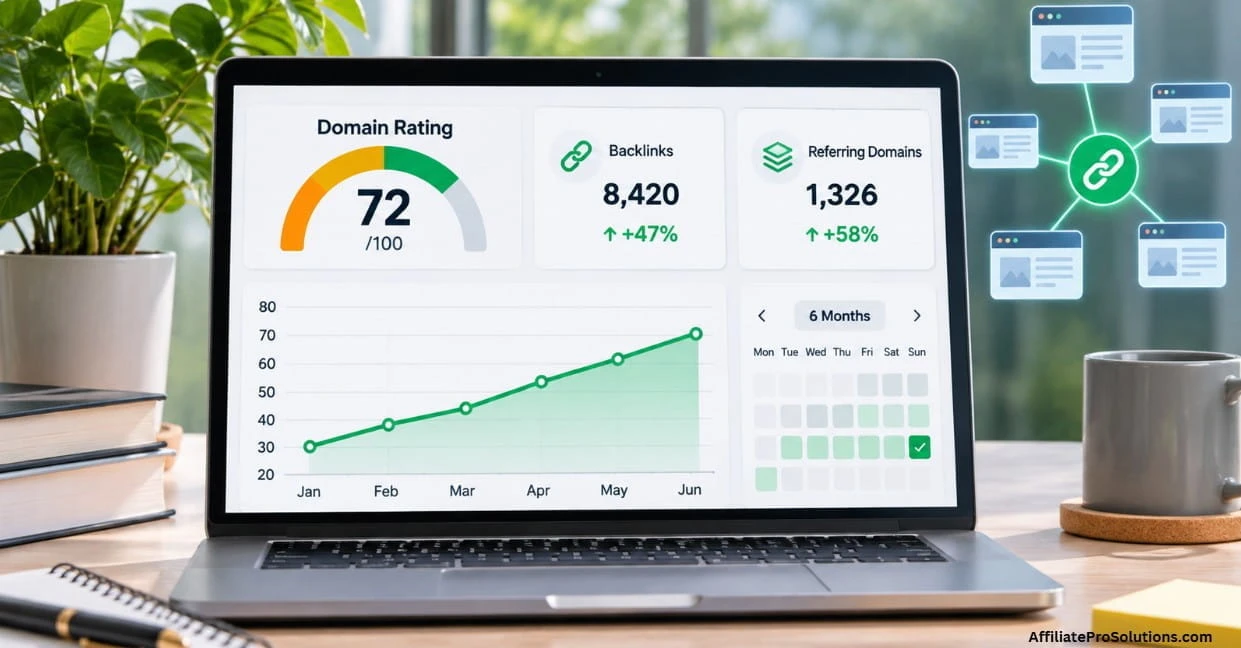
1. The Number of Referring Domains
One of the main things Ahrefs considers is how many different websites provide followed links back to your website.
For example, you might have 100 backlinks, but if they all come from the same website, you still only have one referring domain.
This is important because Ahrefs doesn’t keep awarding additional DR credit for every new link coming from a website that already links to you.
So, if your backlink count is increasing but your referring domains aren’t, that could help explain why your DR hasn’t changed.
I’d recommend that you have a look at both numbers when looking at your backlink profile, rather than only concentrating on your total backlinks.
2. The Strength of Websites Linking to You
Another factor to consider is the Domain Rating of the websites linking back to yours.
Generally, links from websites with stronger backlink profiles can contribute more to your overall score.
On saying that, Ahrefs also considers how many other websites those referring domains link to.
For example, a website with DR 70 might appear to be a particularly valuable source of backlinks. But if it already links to thousands of other websites, the amount it contributes to your DR could be quite small.
That’s why gaining a followed link from a website with a high DR doesn’t guarantee that your own score will increase.
3. Followed and Nofollow Links
As we’ve already covered, Ahrefs uses followed links when calculating Domain Rating.
This means you could have several new backlinks and still see no increase in your score if those links are marked as nofollow.
However, I wouldn’t say these are a waste of time.
A nofollow link from a relevant website, forum, or social media platform can still bring visitors to your articles.
Those visitors might also share your content or reference it on their own websites.
So, while nofollow links don’t directly increase your DR, they can still be useful for your website.
4. Changes to Existing Referring Domains
This is something that’s easy to overlook, particularly if you’re concentrating on getting new backlinks.
Your Domain Rating can change even when you haven’t gained or lost any links yourself.
For example, a website linking to yours might experience a drop in its own DR. It could also start linking to many more websites, which can reduce the amount of rating it passes to yours.
Ahrefs uses a relative scoring system, so changes affecting other websites can also influence your score.
This means your DR might remain unchanged or even decrease, despite your backlink count looking perfectly healthy.
This is definitely one of the reasons I wouldn’t judge the progress of a website only by its Domain Rating.
Why Doesn’t My Domain Rating Increase After Getting New Backlinks?
You might have gained several new backlinks, checked your Ahrefs account, and found that your Domain Rating hasn’t increased at all.
I understand that this can be somewhat frustrating, particularly when you know that other websites have started linking to your content.
However, before assuming that those backlinks aren’t helping, there are a few things worth looking at.
Ahrefs Might Not Have Found Your New Backlinks Yet
One thing to remember is that Ahrefs doesn’t automatically know whenever another website links to yours.
It uses its own crawler, called AhrefsBot, to visit websites and collect information about the links it finds.
According to Ahrefs, it can take anywhere from a few days to several weeks for a newly created backlink to appear in its database.
This depends on several factors, including how frequently Ahrefs crawls the website providing the link and the importance it assigns to the individual page.
For example, if you’ve recently received a backlink from an article that Ahrefs hasn’t visited yet, that link won’t appear in your backlink reports until its crawler finds it.
So, if you’ve only recently gained some new backlinks, I’d give Ahrefs a little time to update its information before worrying too much about your score.
Check Whether Your New Backlinks Are Actually Counting
If Ahrefs has already found the backlinks but your DR hasn’t moved, the next thing I’d suggest is checking your referring domains.
As I’ve explained earlier, additional links from websites that already link to yours don’t keep increasing your Domain Rating.
The same applies to links marked as nofollow, which Ahrefs doesn’t count towards DR.
Here’s what I’d suggest checking in your Ahrefs account.
- New Referring Domains – Have you gained links from websites that weren’t previously linking to yours?
- Followed Links – Are those new referring domains providing followed backlinks?
- Linking Websites – Have a look at the strength of the new referring domains and how many other websites they link to.
- Backlink History – Check whether you’ve also lost any followed links during the same period.
These checks can help you understand why your backlink count might be increasing while your DR remains unchanged.
Give Your Domain Rating Some Time to Update
Another thing I’d recommend is avoiding the temptation to check your Domain Rating every day. And yes, I know, it’s easy to do!
Ahrefs updates its backlink data regularly, but that doesn’t mean every new link will immediately produce an increase in your score.
You might gain several new referring domains and see no movement, only to notice a change later when more of your backlinks have been found and included in Ahrefs’ calculations.
And even then, an increase isn’t guaranteed.
Personally, I’d concentrate on checking how my referring domains are developing across several weeks rather than worrying about every small change in DR.
If your score hasn’t increased, it doesn’t automatically mean your new backlinks are useless or that something is wrong with your website.
Sometimes, it’s simply a case of Ahrefs needing more time to find the links. Other times, the links you’ve gained might not contribute enough to change your score.
Additional SEO Info & Resources
How to Increase Your Domain Rating Naturally
Although there’s no guaranteed timeframe for increasing your Domain Rating, there are some things you can do to encourage other website owners to link to your content.
And please keep in mind that you don’t need to spend money buying backlinks or signing up for expensive link-building services to get started. In fact, I advise against buying backlinks just to increase your DR!
Personally, I’d concentrate on giving people a good reason to reference something that you’ve written.
Here are five ways you can go about this.
1. Publish Articles That Answer Specific Questions
One of the first things I’d recommend is writing articles that answer questions people are actually searching for.
Think about the problems someone in your niche might be trying to solve, or something they want to understand a little better.
For example, if you run a WordPress website, you might publish a detailed guide explaining how to speed up a WordPress website or fix a common plugin problem.
If another blogger is covering a related subject, they might find your article useful enough to include a link to it.
Of course, that doesn’t mean every article you publish will automatically earn backlinks.
However, the more useful information you have available on your website, the more opportunities there are for other people to find and reference it.
2. Include Your Own Experience
This is something I particularly like doing with my own articles.
Whenever possible, I try to include information based on something I’ve personally experienced, tested, or encountered while working on my websites.
It gives readers a better understanding of what actually happened, especially when you’re discussing a problem or explaining how a particular tool works.
Depending on the subject, you could include things such as:
- Your Own Screenshots – Show readers what a tool or feature looks like, particularly when you’re explaining how to use it.
- Problems You’ve Encountered – Explain what went wrong and what you did to solve the problem.
- Results From Your Website – Share relevant statistics or changes you’ve noticed while monitoring your website.
- Practical Examples – Show how you’ve used something, rather than only describing what it does.
- Your Own Observations – Include useful details you’ve picked up through experience that other readers might not have considered.
You don’t need to carry out complicated tests or spend weeks collecting information.
Sometimes, a short explanation of something you’ve experienced can be enough to help another person understand a problem.
And if that information is useful to someone writing about the same subject, they may decide to reference your article.
3. Contact Relevant Website Owners
Another approach is to contact website owners who might be interested in something you’ve published.
For example, let’s say you’ve written a detailed tutorial explaining how to fix a common WordPress issue.
You might find another website that has an article discussing the same problem but doesn’t cover the particular solution you’ve explained.
You could send the owner a short message, introduce your article, and explain why you thought it might be useful to their readers.
However, don’t go sending the same generic message to lots of different websites.
If you’re going to contact somebody, take a little time to read their content first and make sure your article is actually relevant. And don’t be surprised if you don’t receive a reply either. Website owners get plenty of emails, and many won’t be interested in adding another link.
I’d treat this as an opportunity to introduce your content rather than expecting a backlink every time you contact someone.
4. Contribute to Relevant Websites and Communities
Participating in websites and online communities related to your niche can also help other people become familiar with your content.
This might involve writing a guest article for another website, answering questions in a forum, or taking part in discussions where you have something useful to contribute.
For example, if someone in a WordPress discussion is struggling with a problem you’ve already encountered, you might be able to explain how you solved it.
If you have an article that provides further instructions, you could share it when the community allows relevant links.
However, I wouldn’t recommend joining forums or leaving comments simply to get backlinks.
Most forum and comment links won’t contribute directly to your DR anyway, and repeatedly posting links where they aren’t wanted can quickly become a problem.
I’d concentrate on participating in discussions where you can genuinely help someone.
You might not receive a backlink immediately, but getting your content in front of interested readers can sometimes lead to other websites mentioning it later.
5. Keep Your Existing Content Updated
Something else I’d recommend is regularly checking your older articles.
This is especially important if your website covers software, online services, or tools that change quite often.
For example, you might have published an article about WordPress plugins for small niche sites or a detailed tutorial explaining how to use a particular plugin.
Six months later, the plugin might have changed its settings, introduced new features, or removed some of the options you originally covered.
If someone follows your instructions and finds that they no longer apply, the article isn’t going to be particularly helpful.
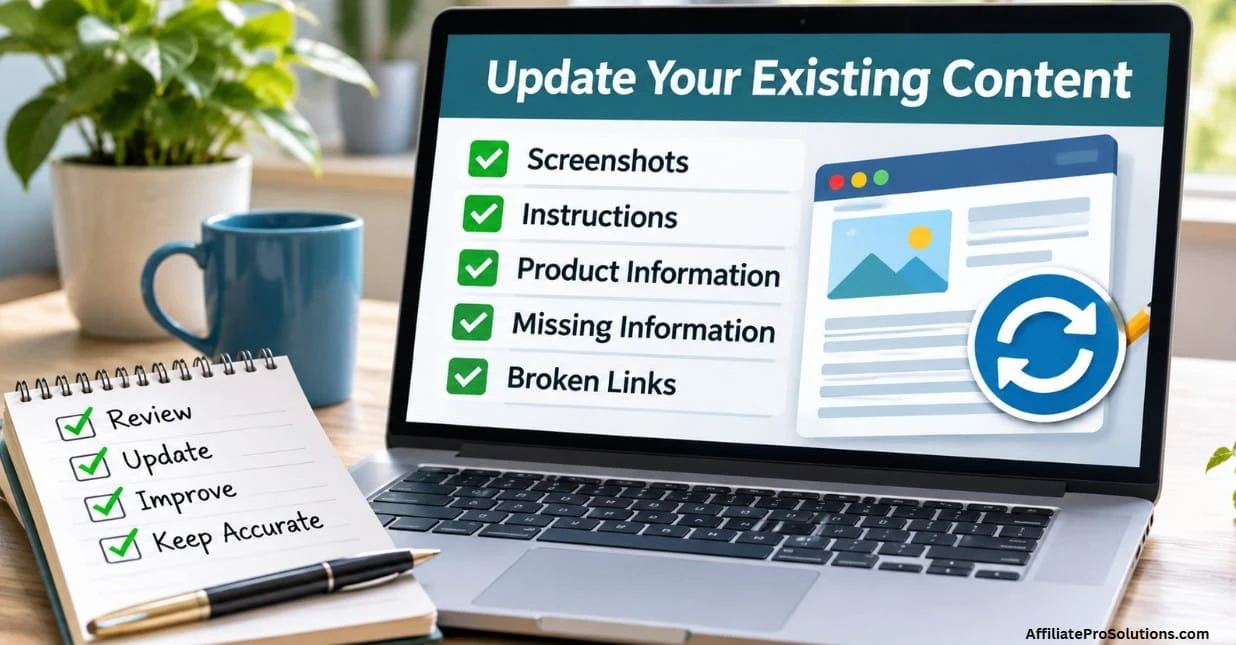
When reviewing your older content, I’d look at things such as:
- Screenshots – Replace images that no longer show the current version of a tool or service.
- Instructions – Correct any steps that have changed or no longer work.
- Product Information – Check that features, pricing, and other important details are still accurate.
- Missing Information – Add anything useful that has become available since you first published the article.
- Broken Links – Check that your internal and external links still lead to the correct pages.
Now, updating an article won’t directly increase your Domain Rating.
However, if other website owners are looking for information to reference, an accurate and recently maintained article can give them a good reason to link to yours.
And even if those backlinks don’t arrive, keeping your content up to date is still worthwhile for the people visiting your website.
Can Domain Rating Increase Without Publishing New Content?
Yes, it can. Absolutely. Your Domain Rating can continue increasing even if you haven’t published a new article for several months.
As I’ve explained earlier, Ahrefs calculates DR using your backlink profile, so publishing new content isn’t something that directly affects your score.
Articles you’ve already published can still get attention from other website owners, especially if they contain information that people find useful enough to reference.
For example, you might have written a detailed tutorial several months ago that another blogger has only recently come across. If they decide to include a followed link to that article, it could contribute to your Domain Rating.
Changes to websites that already link to yours can also influence your score, even when you haven’t gained any new backlinks.
So, if you’ve taken a break from publishing, don’t automatically assume that your DR will stop increasing.
Your existing content can continue attracting backlinks, and your Domain Rating can still change while you’re away from your website.
Why Did My Domain Rating Suddenly Drop?
Seeing your Domain Rating suddenly drop can be worrying, particularly if you’ve spent months watching it increase.
However, a decrease in DR doesn’t necessarily mean there’s something wrong with your website or that Google has penalized it.
There are several reasons why your score might decrease, and some of them have very little to do with anything you’ve personally done.
According to Ahrefs, some possible explanations include:
- Lost Backlinks – Websites may have removed followed links that previously contributed to your Domain Rating.
- Changed Link Attributes – Some of your existing followed links might have been changed to nofollow, meaning they no longer contribute to your DR.
- Lower Referring Domain Ratings – Websites linking to yours may have experienced decreases in their own DR, affecting the amount of rating they pass to you.
- Changes in Ahrefs’ Calculations – Because Domain Rating is relative, changes affecting other websites can influence your score, even when your own backlinks haven’t changed.
If you notice a sudden drop, I’d recommend checking your referring domains and backlink history before making changes to your website.
Have a look at whether you’ve lost any followed links or whether some of your referring domains have changed.
I’d also check Google Search Console to see if your organic traffic, search impressions, or keyword rankings have been affected.
Remember, Ahrefs Domain Rating is a third-party metric. A drop in DR doesn’t automatically mean your website has lost its visibility in Google.
My advice is to investigate the change, but don’t panic or start making unnecessary changes based on the DR number alone.
Should You Buy Backlinks to Increase Domain Rating Faster?
If you’ve been looking at ways to increase your Domain Rating, you’ve most likely come across websites offering backlink packages that promise amazing and fast results.
I’ve even seen some advertising services that claim they can take your website to DR 40, 50, or higher within a matter of weeks.
Personally, I’d be very careful with these offers, and I certainly wouldn’t recommend paying someone simply to increase your DR score.
Remember, Domain Rating is a metric created by Ahrefs. Even if a service manages to increase your score considerably, that doesn’t mean your website will suddenly start ranking higher in Google or receiving more visitors.
The problem is that some of these services concentrate on getting large numbers of backlinks purely to influence SEO metrics. Those links might come from websites with little content, unrelated topics, or networks created specifically for link building.
And there’s another thing worth knowing about.
Google has policies against link spam, including buying or selling links that pass ranking credit when the purpose is to manipulate search rankings. If Google identifies such practices, the links may be ignored, or your website could face ranking penalties.
Now, this doesn’t mean that paying for advertising or having a sponsored article published is automatically against Google’s rules.
Paid links can be handled appropriately by using attributes such as rel="sponsored" or rel="nofollow".
However, if somebody is offering to sell you hundreds of followed backlinks with the promise of increasing your DR, I’d think very carefully before spending any money.
From me to you, just concentrate on publishing useful content and earning backlinks from websites that have a genuine reason to reference your articles.
And remember, having a higher Domain Rating doesn’t guarantee that your website is doing better in Google.
How Often Should You Check Your Domain Rating?
If you’re regularly working on your website and trying to improve your Domain Rating, I can certainly understand why you might be tempted to check Ahrefs every day.
I’ve done this myself, especially when I’ve noticed my DR increasing and wanted to see if it had gone up any further.
To be honest, though, checking your score every day isn’t really necessary.
Ahrefs regularly updates its backlink data, and your Domain Rating can change as new information becomes available. But small daily movements don’t always tell you much about how your website is progressing.
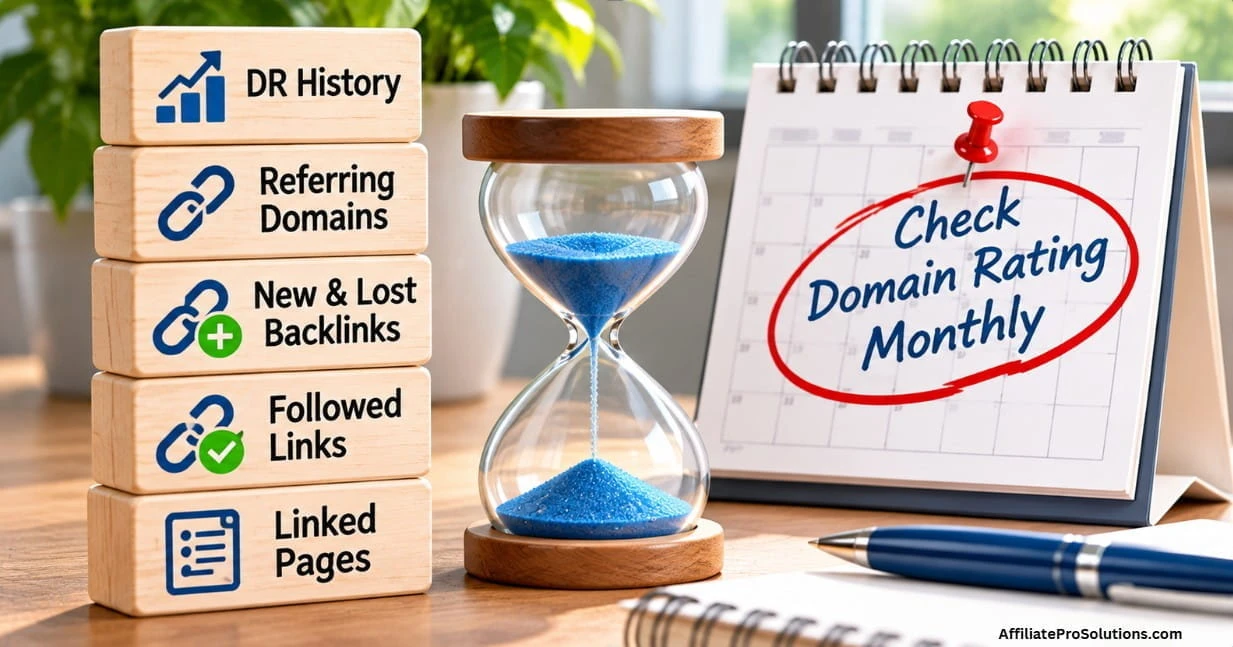
Personally, I’d recommend checking your DR and referring domains around once a month. That should give you a better idea of what’s happening with your backlink profile.
What Should You Check In Ahrefs?
When looking through your Ahrefs statistics, there are a few things I’d pay attention to.
- Domain Rating History – Look at how your DR has changed across several months. This can help you identify increases, decreases, or periods when your score hasn’t moved much.
- Referring Domains – Check how many different websites are linking back to yours and if that number is increasing.
- New And Lost Backlinks – Have a look at which backlinks you’ve recently gained and if any existing ones have disappeared.
- Followed Referring Domains – Check how many of the websites linking to yours provide followed links that can contribute to your DR.
- Pages Receiving Backlinks – Find out which of your articles are attracting links. This might give you an idea of the subjects other website owners find useful enough to reference.
Another thing I’d suggest is having a look at your Google Search Console account to see what’s happening with your website in Google’s search results.
For example, you can monitor your clicks, impressions, and the search queries bringing people to your articles.
These are useful figures to keep an eye on because your Domain Rating might increase while your search traffic remains unchanged, or even decreases.
My advice is to look at how your website is progressing across several months rather than becoming too concerned about every small change in DR.
Does a Higher Domain Rating Improve Your Google Rankings?
No, increasing your Domain Rating doesn’t automatically mean your website will start ranking higher in Google.
As I’ve explained earlier, DR is calculated by Ahrefs, and Google doesn’t use this score as a direct ranking factor.
However, backlinks can play a part in how Google evaluates your pages, so earning links from relevant websites may also help your search rankings.
But don’t assume that a website with a higher DR will always rank above yours. That’s not necessarily how Google rankings work.
Google considers many things when deciding which pages to show in its search results, including how relevant and useful the content is to the person searching.
I’ve experienced this with Affiliate Pro Solutions, where several of my articles and reviews have reached the first page of Google despite my website having a relatively low DR at the time.
So, while I’d certainly keep an eye on your Domain Rating, I wouldn’t make increasing it your main priority.
If you’re struggling to attract visitors, I’ve also written a guide on why your website is not getting traffic, which covers several other things worth checking.
Frequently Asked Questions – FAQs
There’s no fixed timeframe for reaching DR 10. Some websites might get there within a few weeks or months after earning followed backlinks from established websites, while others could take longer. It really depends on the strength of the websites linking to yours and how Ahrefs calculates their contribution to your score.
The main thing you need to concentrate on is earning followed backlinks from other websites. I’d recommend publishing useful articles, including your own experiences where possible, and giving other website owners a good reason to reference your content. However, don’t expect your DR to increase every time you gain a new backlink.
There could be several reasons for this. Ahrefs might not have found your new backlinks yet, or they might come from websites that already link to yours. Some links may also be marked as nofollow, meaning they won’t contribute to your DR. I’d suggest checking your referring domains in Ahrefs before becoming too concerned.
Yes, it certainly can. Your DR can drop if you lose followed backlinks, if the websites linking to yours experience changes in their own ratings, or because of changes in Ahrefs’ calculations. However, a sudden decrease doesn’t automatically mean something is wrong with your website or that Google has penalized it.
There isn’t one particular DR score that every website should aim for. A Domain Rating of 20 or 30 might be encouraging for a smaller website, but the number alone doesn’t tell you how well your website is performing. Personally, I’d also pay attention to your organic traffic, keyword rankings, and the quality of the websites linking to yours.
What I’ve Learned From Monitoring My Own Domain Rating
I’ve been keeping an eye on the Domain Rating of my website, Affiliate Pro Solutions, for quite some time now, and I’ve seen some interesting changes as I’ve progressed.
Before starting my summer job in 2026, my DR was somewhere around 4 to 7. At that point, I was regularly publishing articles and reviews, but once the summer season started, I simply didn’t have the time to continue.
Despite not publishing anything new for several months, I watched my Domain Rating increase to around 18 to 19 by September. Of course, I was pleased with this, but then something unexpected happened.
Towards the end of October, my DR suddenly dropped to approximately 5, even though Ahrefs was still showing around 1,200 backlinks and close to 1,000 linking websites.
I haven’t established exactly what caused that decrease, so I wouldn’t want to suggest that anything was wrong with my website based on that number alone.
What I’ve learned from this experience is that Domain Rating can change quite considerably, even when you’re not making any major changes to your website.
That’s why I now pay attention to my referring domains, organic traffic, and keyword rankings alongside my DR. For me, these figures give me a better understanding of how my website is actually performing.
Final Thoughts
So, how long does it take to increase Domain Rating?
As I’ve explained throughout this article, there’s no fixed timeframe. You might see your score increase within a few weeks, or it could take several months before you notice any real movement.
One thing I’ve learned from monitoring my own website is that Domain Rating doesn’t always behave the way you expect it to. I’ve seen my score increase considerably during a break from publishing, and I’ve also experienced how quickly it can drop.
For that reason, I wouldn’t spend too much time worrying about every little change in your DR.
My advice is to concentrate on publishing useful content, keeping your existing articles up to date, and giving other website owners a good reason to link back to your website.
And remember, there’s much more to running a successful website than increasing your Domain Rating. Keep an eye on your organic traffic, keyword rankings, and how your articles are performing in Google.
Thanks for staying with me and reading my article on How Long Does It Take to Increase Domain Rating. If you’ve been monitoring your own DR, I’d be interested to hear how it’s been progressing.
Have you experienced any sudden increases or drops? Feel free to share your experience or ask any questions in the comments below.
Chris
Wealthy Affiliate
This is where my journey into the online world began, and it’s still the community I use for learning, tools, and support while working on my own projects.

About Chris Towers – Follow Me

My name is Chris Towers, and I run Affiliate Pro Solutions. I work with websites, content, and affiliate projects, and this website is where I share what I’ve learned from doing that work.
Most of what I write about comes from researching hosting companies, tools, and platforms that people use when building websites or trying to earn online. I look at how things are set up, what’s included, and where people often get caught out later.
I’m not connected to the companies I review beyond standard affiliate partnerships. This site does include affiliate links, but the aim here is to explain how the services work rather than push anyone into a decision.
You’ll find me on
Related
- How Long Does It Take to Increase Domain Rating?
- Why Is My Website Not Getting Traffic And What Am I Doing Wrong?

- How To Optimize Your Website For Voice Searches That Rank

- Pillar Pages Explained And How They Improve Your SEO

- How Does Internal Linking Help SEO? Better Rankings Made Easy!

- How To Drive More Traffic To Your Blog Using Medium

Just to be open with you, this page includes affiliate links. If you click on one of these links and make a purchase, I earn a small commission. There is no extra cost to you at all. This simply helps support the content I share here. Thank you for your support, it really is appreciated.